10 Front Yard Landscaping Ideas to Transform Your Curb Appeal for a Stunning Home Exterior
Your front yard shapes the first impression of your home. With thoughtful plants, clear lines, and welcoming details, you can create a landscape that feels polished and fits your home’s style.
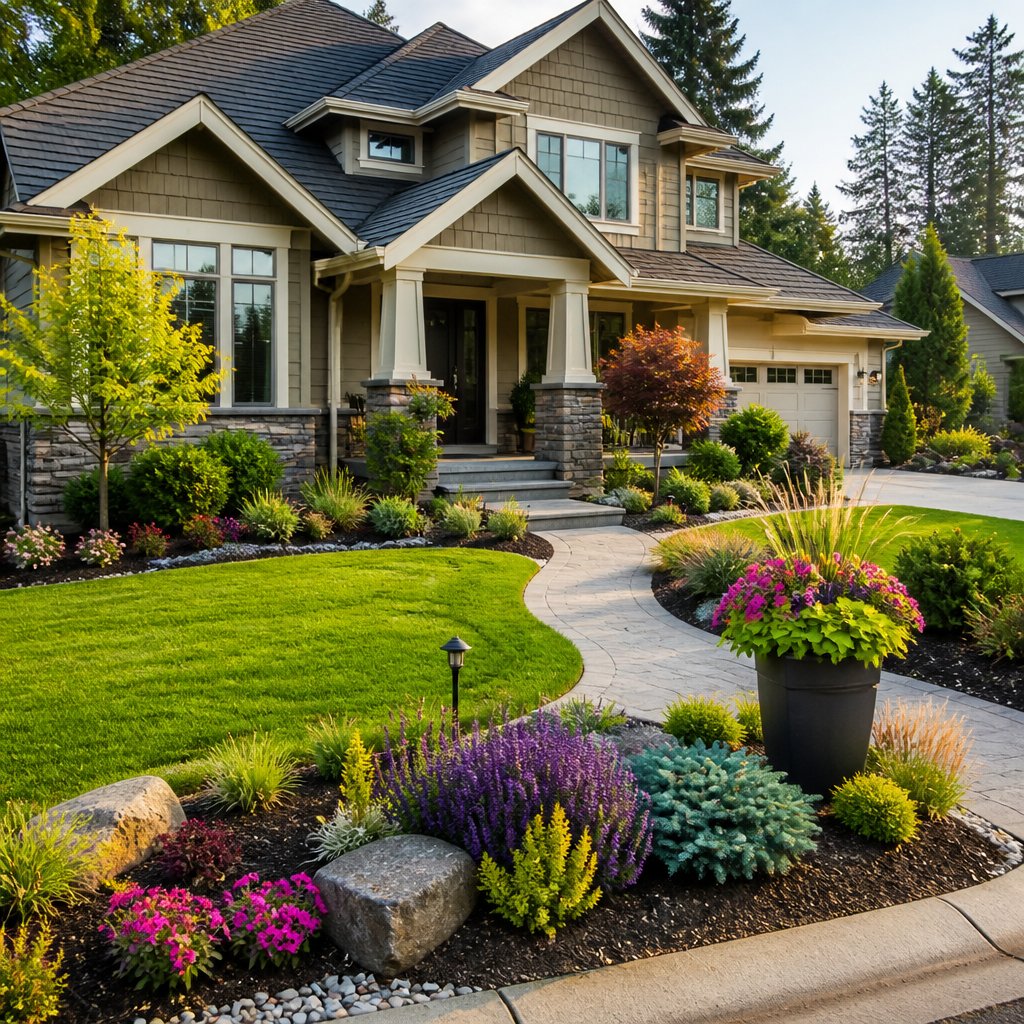
You can improve curb appeal by combining a welcoming path, balanced plantings, seasonal color, and practical materials. These ideas will help you plan a cohesive design that stays attractive and manageable over time.
1) Create a welcoming pathway with stone or brick pavers
Use stone or brick pavers to give your front yard a clear, durable route to the entrance. Choose a straight layout for a formal look or a gentle curve to guide visitors through planted areas.
Match the paver color and texture to your home’s exterior. Brick suits traditional homes, while natural stone or concrete pavers can support modern designs. Explore paver walkway ideas for front entrances for layout inspiration.
Add low plants along the edges, but leave enough room for walking and maintenance. Path lights can improve visibility after dark without overpowering the landscape.
2) Frame the entrance with symmetrical evergreen shrubs
Place matching evergreen shrubs on both sides of your front door, walkway, or steps to create balance and guide attention toward the entrance. Choose plants that suit your climate, soil, and the amount of sunlight the area receives.
Boxwood, holly, yew, and juniper can provide year-round structure, but their mature size and maintenance needs vary. Check the plant label before buying, and leave enough room for growth so the shrubs do not crowd windows, paths, or walls.
Keep the design simple with identical plants or repeat the same planting pattern along the walkway. Symmetrical front yard layouts can help you plan a consistent arrangement while keeping the entrance neat in every season.
3) Plant a colorful perennial border along the walkway
Planting perennials along your walkway adds lasting color and defines the path. Choose compact plants that stay within their space and leave enough room for people to walk safely.
Combine plants with different bloom times, heights, and leaf shapes for visual interest through the growing season. Low-growing options, such as creeping thyme, can soften hard edges, while flowering perennials add seasonal color and texture. Explore these perennial front-yard planting ideas for suitable combinations.
Check each plant’s sunlight, soil, watering, and hardiness needs before planting. Keep taller varieties toward the back and shorter plants near the walkway so they do not block the path or hide your home.
4) Add a statement tree for height and seasonal interest
Choose a tree that fits your yard’s mature size, soil, climate, and available space. A small ornamental tree may suit a compact lot, while a larger shade tree needs more room from your home, sidewalks, driveways, and utility lines.
Use placement to frame your entry or draw attention to attractive features without blocking windows or walkways. Flowering trees add spring color, while trees with autumn foliage, attractive bark, or evergreen leaves provide interest in other seasons. Explore front yard tree ideas with spacing and placement guidance before planting.
5) Replace thirsty turf with a drought-tolerant native garden
Remove part or all of your lawn and replace it with native plants suited to your climate, soil, and sunlight. Native species often need less supplemental water once established, while also supporting local pollinators.
Group plants with similar water needs to make irrigation easier. Use curving garden beds with drought-tolerant native plants to create a natural layout, then add mulch to reduce evaporation and limit weeds.
Choose a mix of groundcovers, flowering perennials, shrubs, and small ornamental grasses for varied height and seasonal interest. Install drip irrigation where needed, and water deeply but less often as plants develop strong root systems.
6) Install layered foundation plantings beneath front windows
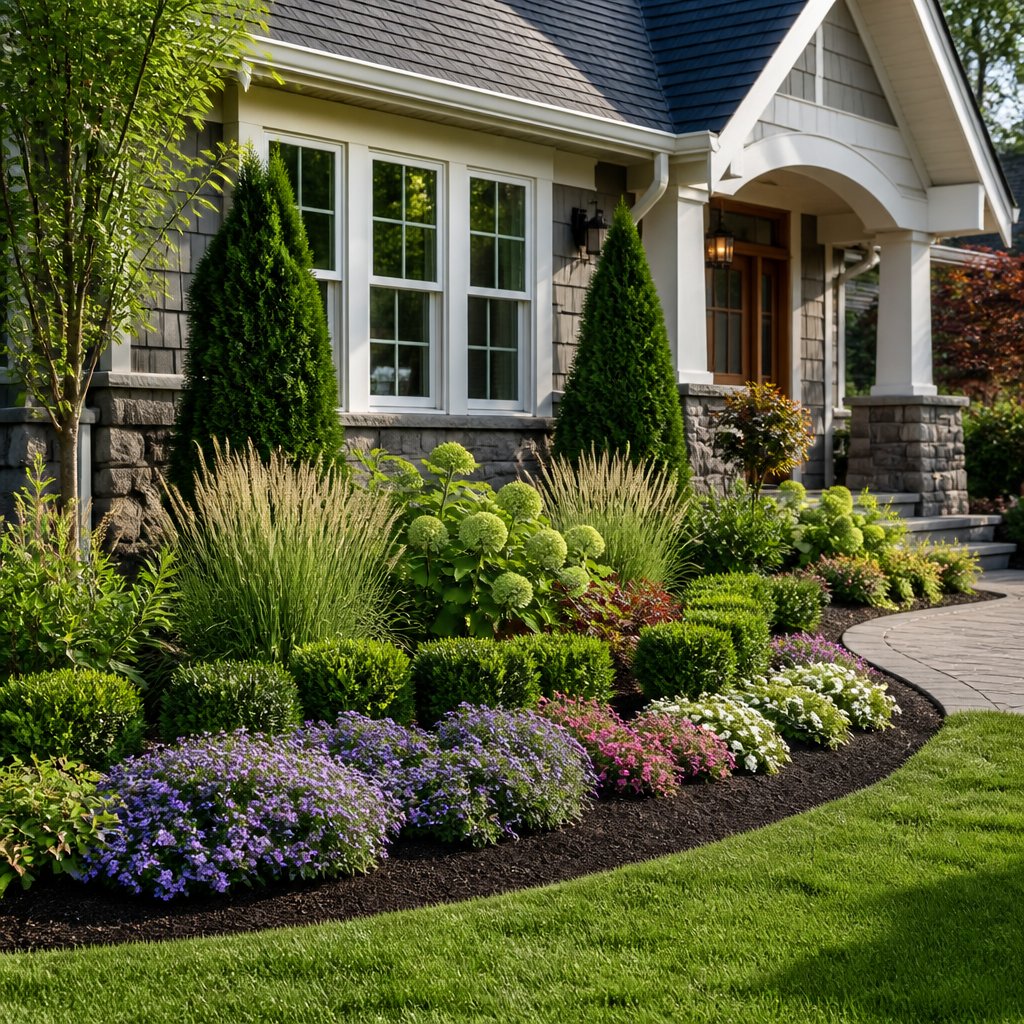
Use a mix of plant heights to frame your front windows without blocking them. Place low flowers or ground covers closest to the walkway, medium perennials in the middle, and compact shrubs near the wall.
Choose plants that match your sunlight, soil, and climate. Leave enough space for mature growth, airflow, window access, and routine maintenance. Keep taller plants below the window line unless you want added privacy.
Evergreen shrubs can provide structure through winter, while flowering plants add seasonal color. This layered foundation planting approach helps create depth while keeping the bed organized. Define the edge with a clean border or mulch to give the design a finished appearance.
7) Use ornamental grasses to add texture and movement
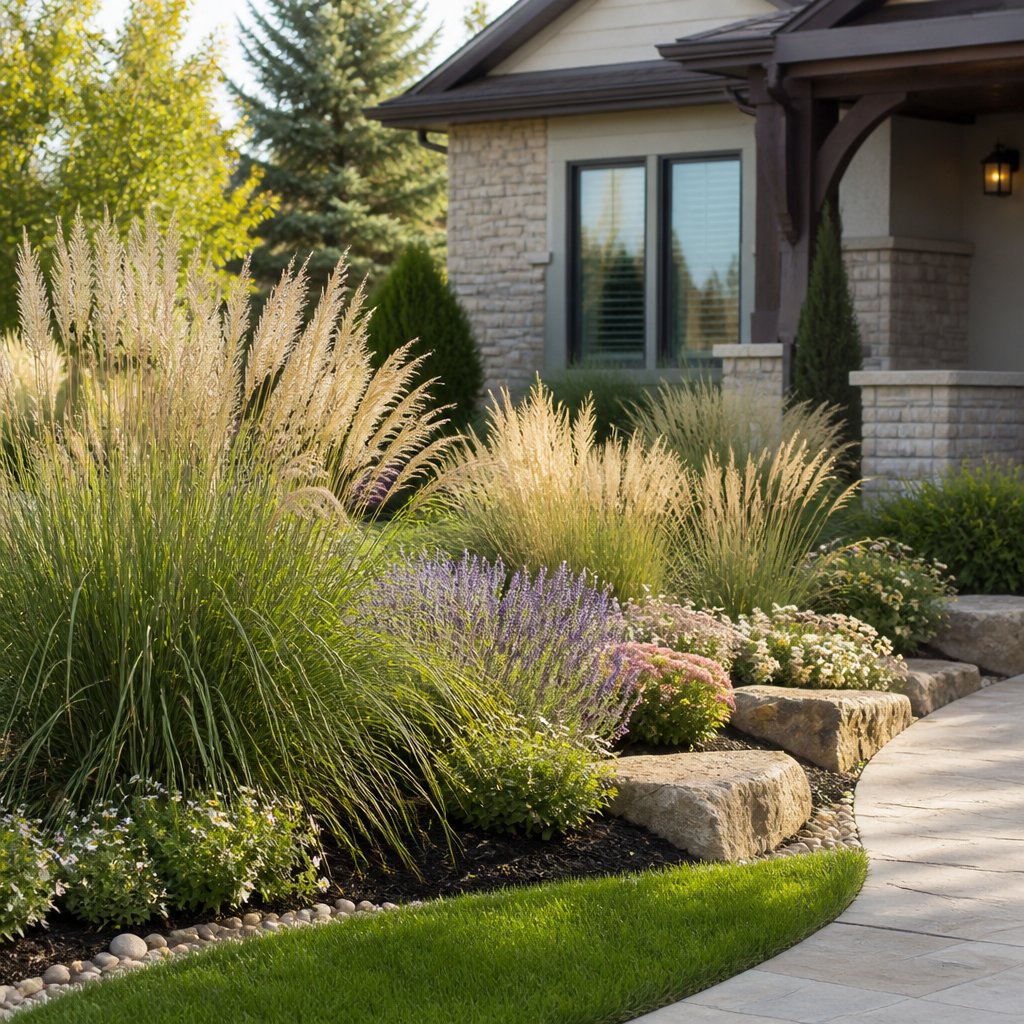
Ornamental grasses add shape, texture, and gentle movement to your front yard. Use them along walkways, around entry paths, or in planting beds to soften hard edges and add interest.
Choose varieties that match your space and local climate. Short grasses can frame a path, while taller types can screen utility areas or add structure near the front porch. Check the mature height and spread before planting.
Group several plants together for a fuller display, or combine grasses with flowering perennials and evergreen shrubs. Many varieties need little care once established, but you should cut back deciduous grasses in late winter or early spring. Explore more ornamental grass landscaping ideas for layout inspiration.
8) Define garden beds with a clean stone or metal edging
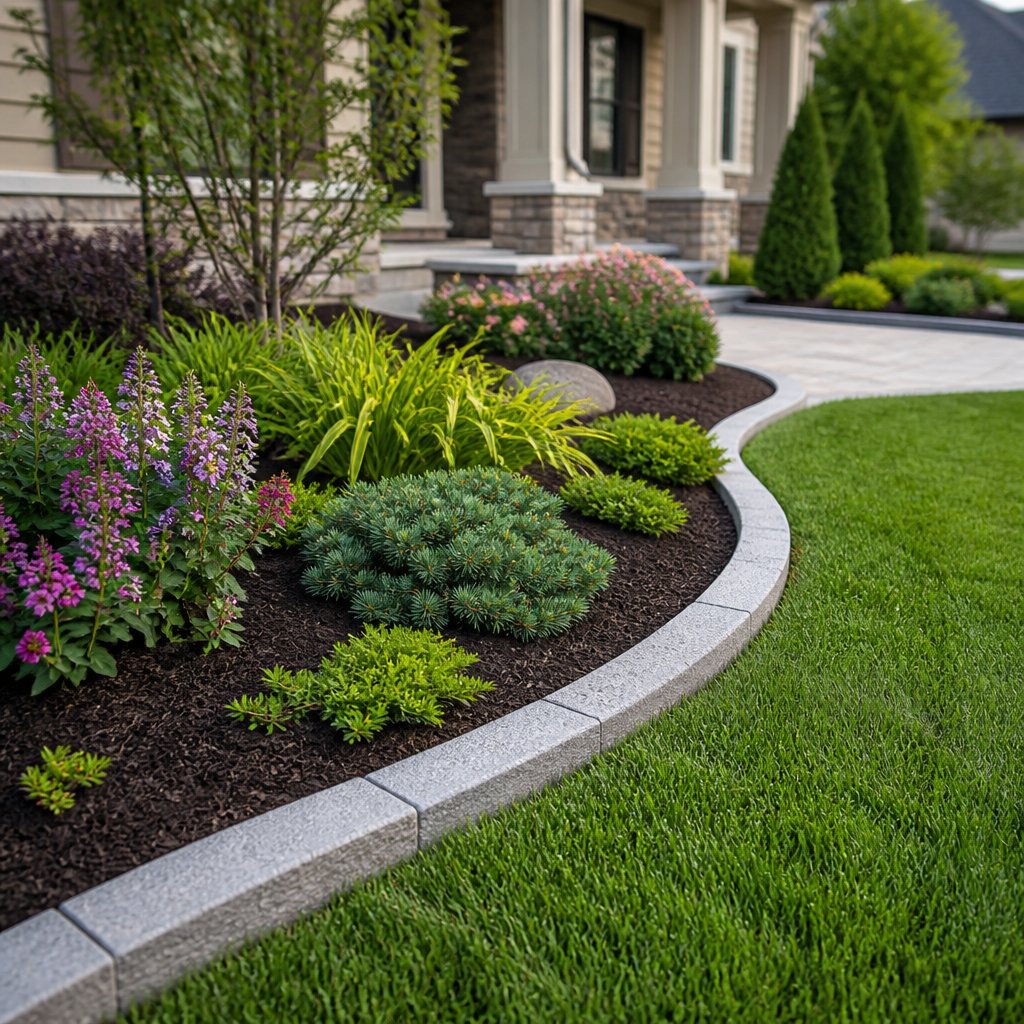
Use stone edging to give your garden beds a natural, textured boundary. Stacked flat stones or small boulders can soften the transition between your lawn and plantings, as shown in these natural stone edging ideas.
Choose metal edging for a slimmer, modern look. Its narrow profile creates clear lines around beds, paths, and lawn areas without drawing attention away from your plants. Properly installed edging also helps contain soil and reduce grass spreading into planting areas.
Match the material to your home’s style. Use dark metal with contemporary designs, or select stone that complements your walkway, foundation, or driveway.
9) Add window boxes filled with seasonal flowers
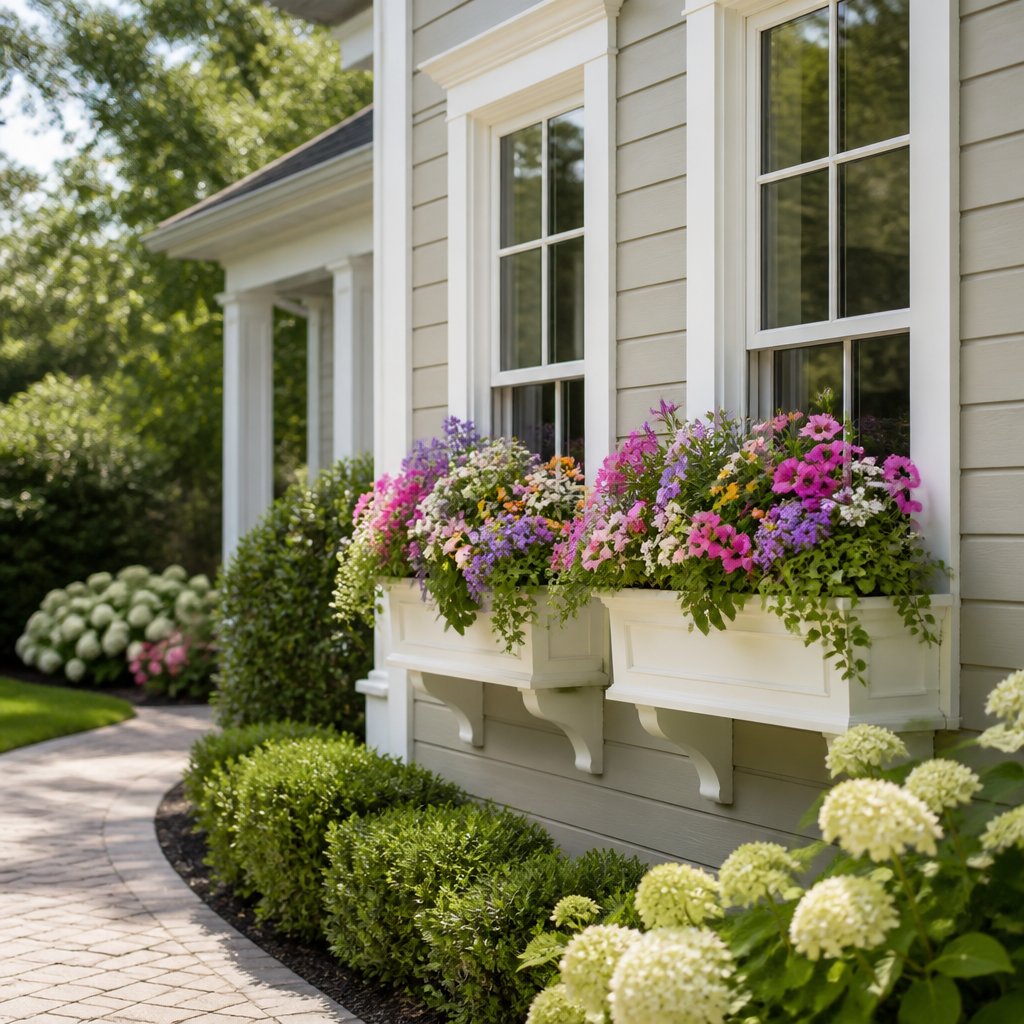
Window boxes add color at eye level and help connect your home with the garden. Choose boxes that match your home’s style, then secure them firmly to the wall or window frame.
Use plants suited to your sunlight and local climate. Combine upright plants, trailing flowers, and leafy fillers for texture, or keep the design simple with one seasonal color.
Replace plants as the weather changes. Cool-season flowers work well in spring and fall, while heat-tolerant annuals suit summer. Add drainage holes and use fresh potting mix to help prevent waterlogged roots. (seasonal window box ideas)
10) Design a modern gravel landscape with sculptural plants
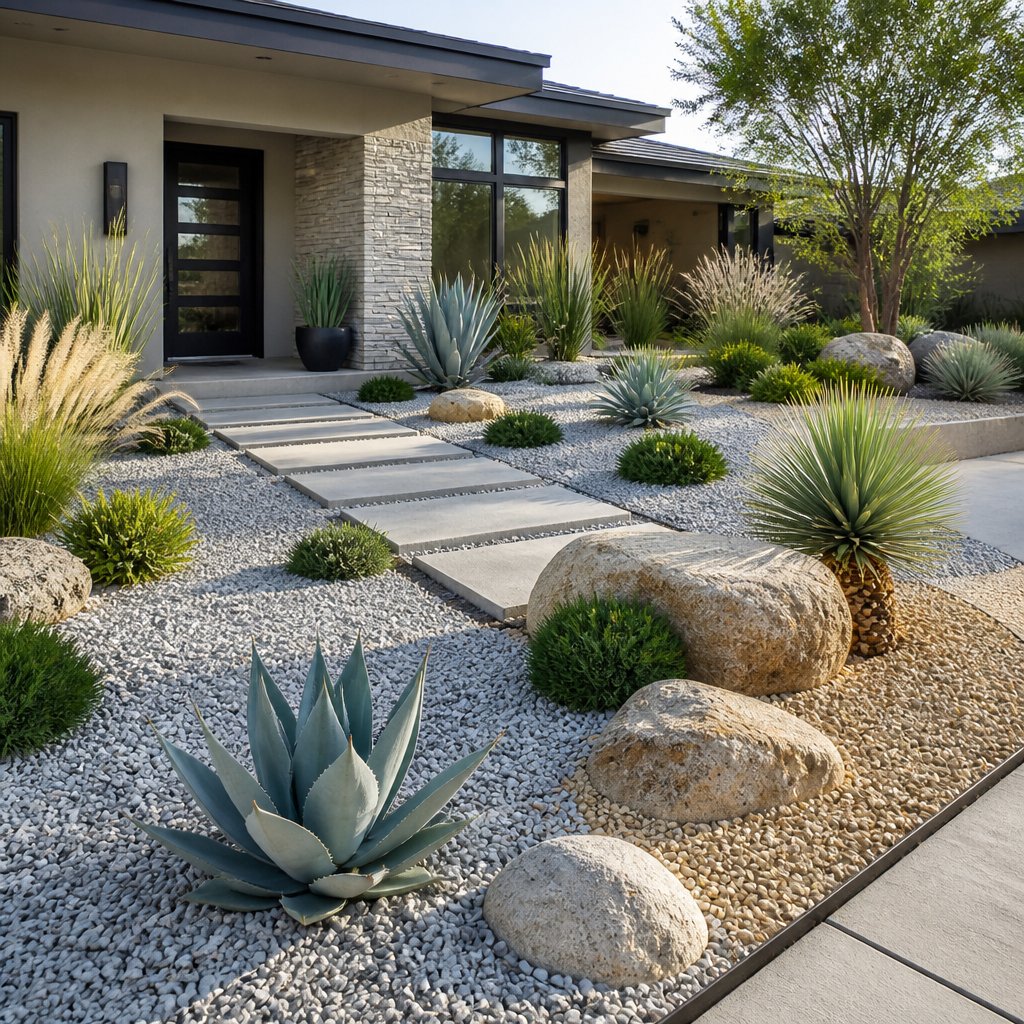
Create a clean, structured front yard with gravel, stone edging, and a few bold plants. Choose gravel that complements your home’s exterior, such as pale stone for contrast or gray gravel for a softer modern look.
Use large stepping stones to define a path from the sidewalk to your door. Keep the layout simple, with open gravel areas and planted pockets rather than scattered features. Modern gravel gardens often pair stone with sculptural plants.
Choose plants suited to your local climate, such as ornamental grasses, agaves, yuccas, or compact shrubs. Add landscape fabric only where appropriate, secure the gravel with edging, and leave enough space around plants for growth and maintenance.
Planning A Cohesive Front Yard Design
A successful front yard design begins with careful site planning and plant selection. You need to account for sunlight, soil, drainage, and the architectural style of your home before choosing plants, paths, edging, or other features.
Assessing Sunlight, Soil, And Drainage
Observe your yard at different times of day. Mark areas with full sun, partial shade, and deep shade. Full-sun areas receive at least six hours of direct light, while shaded spaces need plants suited to lower light. Check how shadows from your home, fences, and trees change throughout the year.
Test your soil before planting. A soil test can show its pH and nutrient levels, helping you choose suitable plants and amendments. Also examine drainage after heavy rain. If water remains near the foundation, direct it away with a gentle grade, a rain garden, or plants that tolerate moist soil. Do not place soil against siding or cover drainage paths.
Group plants with similar needs. Place drought-tolerant species in dry, sunny areas and moisture-loving plants in naturally damp spots. This approach reduces maintenance and helps plants grow well.
Matching Landscape Features To Your Home’s Architecture
Use your home’s design to guide the shape, materials, and planting style of your yard. A traditional home may suit clipped hedges, symmetrical beds, brick edging, and a straight walkway. A modern home often works well with simple plant groupings, clean lines, gravel, concrete, or large-format pavers.
Repeat colors and materials to create visual connection. For example, match stone edging to the home’s foundation or repeat a door color in flowers and planters. Keep the walkway wide enough for comfortable use and position it so visitors can clearly reach the entrance.
Choose plants that support the home rather than hide it. Use low plants near windows, medium-height shrubs beside corners, and taller trees farther from the foundation. Before planting, review front yard layout ideas and adapt the spacing to your lot, climate, and home style.
Maintaining Lasting Visual Appeal
A neat front yard depends on regular pruning, timely seasonal work, and plants that fit your local climate. Choose water-wise designs, maintain clear walkways, and adjust care as weather and plant growth change.
Seasonal Care And Pruning Basics
Remove dead, damaged, or diseased branches during the plant’s recommended pruning season. Prune flowering shrubs after they bloom if they flower on old wood. For plants that bloom on new growth, prune during late winter or early spring before fresh growth begins.
Keep shrubs away from windows, walkways, and exterior walls. Trim hedges with a slightly wider base than top so sunlight reaches the lower branches. Use sharp, clean tools, and disinfect them between plants when you remove diseased material.
Refresh mulch to a depth of about 2–3 inches, but keep it several inches away from trunks and building foundations. Pull weeds while they are small, check irrigation lines for leaks, and remove fallen leaves from paths before they become slippery.
Balancing Beauty With Water-Wise Choices
Group plants with similar sunlight and water needs. Place drought-tolerant perennials, ornamental grasses, and native plants in areas that receive little irrigation. Reserve higher-water plants for visible spots near the entry, where they create the most impact.
Use drip irrigation or soaker hoses to deliver water near plant roots. Water deeply and less often when conditions allow, rather than giving plants frequent, shallow watering. Follow local watering rules and check the soil before turning on irrigation.
A layer of organic mulch helps reduce evaporation and limits weed growth. Replace thirsty lawn sections with paths, gravel beds, ground covers, or planting areas, as suggested in these low-maintenance front yard landscaping ideas. Choose permeable surfaces where possible so rain can soak into the soil.