10 Vertical Garden Ideas That Grow More Food in Half the Space — Genius Small-Yard Hacks
Want more fresh food without needing a bigger yard? You can double what you grow by stacking, hanging, and trellising upward so every sunny wall, railing, or balcony becomes productive. You’ll get ten practical vertical garden ideas that help you grow more food in half the space, reduce clutter, and cut back on maintenance.
This list walks you through proven setups — from simple upcycled herb walls to compact hydroponic towers — so you can pick approaches that match your skill level and space. Expect clear how-to tips, common mistakes to avoid, and real examples that make it easy to start building a vertical garden that actually produces.
1) Stackable Straw Bale Vegetable Planter Tower
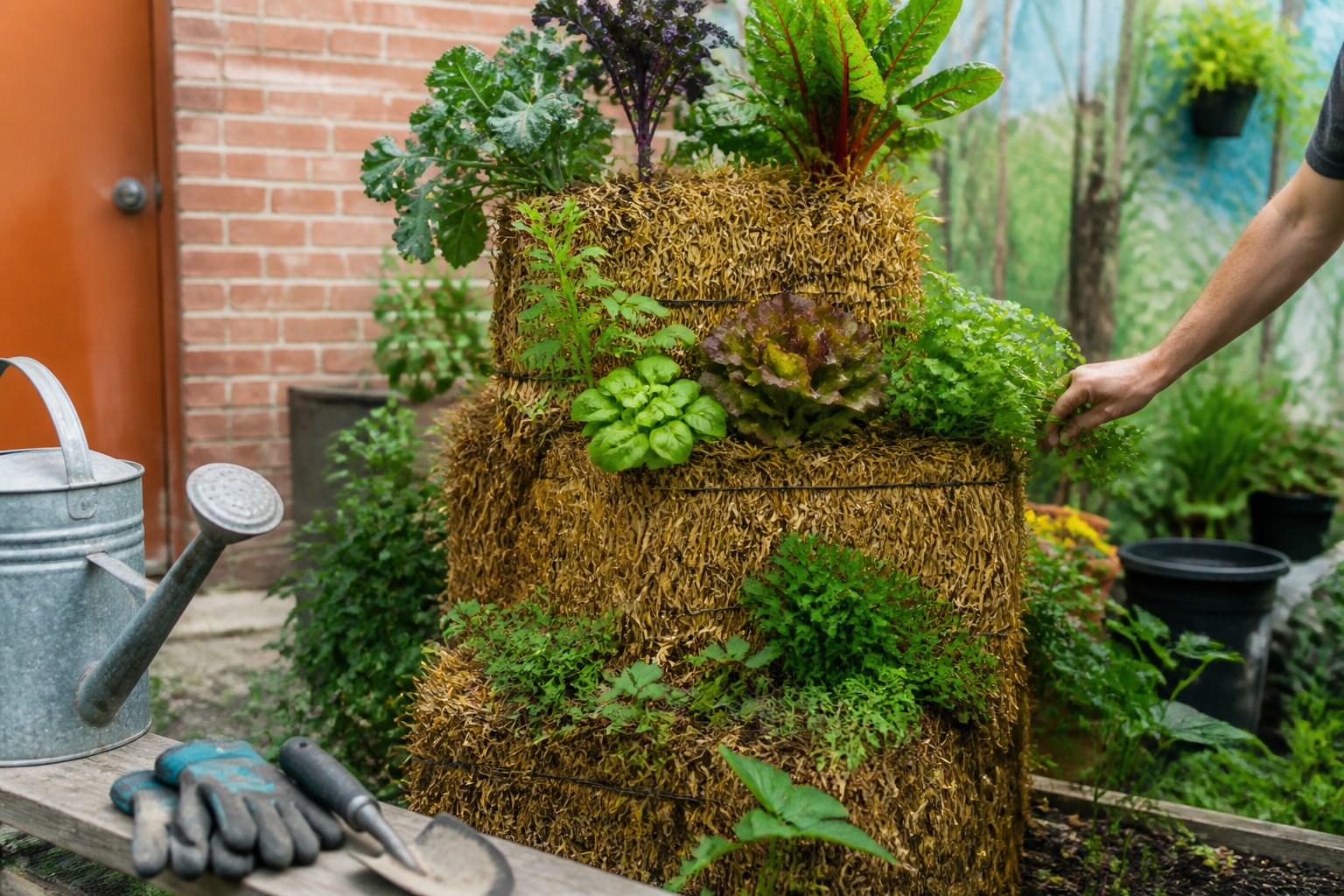
Build a tower by stacking straw bales with holes cut for plants. This gives you quick drainage, warm soil, and a lightweight tower you can move if needed.
Plant shallow-rooted greens like lettuce and herbs near the top, and deeper-rooted crops such as bush beans lower down. Water deeply after planting — straw soaks up moisture fast, so check soil twice daily at first.
A common mistake is packing the holes too tight — leave space so roots can breathe. Overfertilizing straw can also burn seedlings; use a balanced, slow-release feed or compost tea instead.
Try rotating one bale annually to refresh the straw and avoid pest buildup.
2) PVC Bottle Hanging Herb Wall (Upcycled)
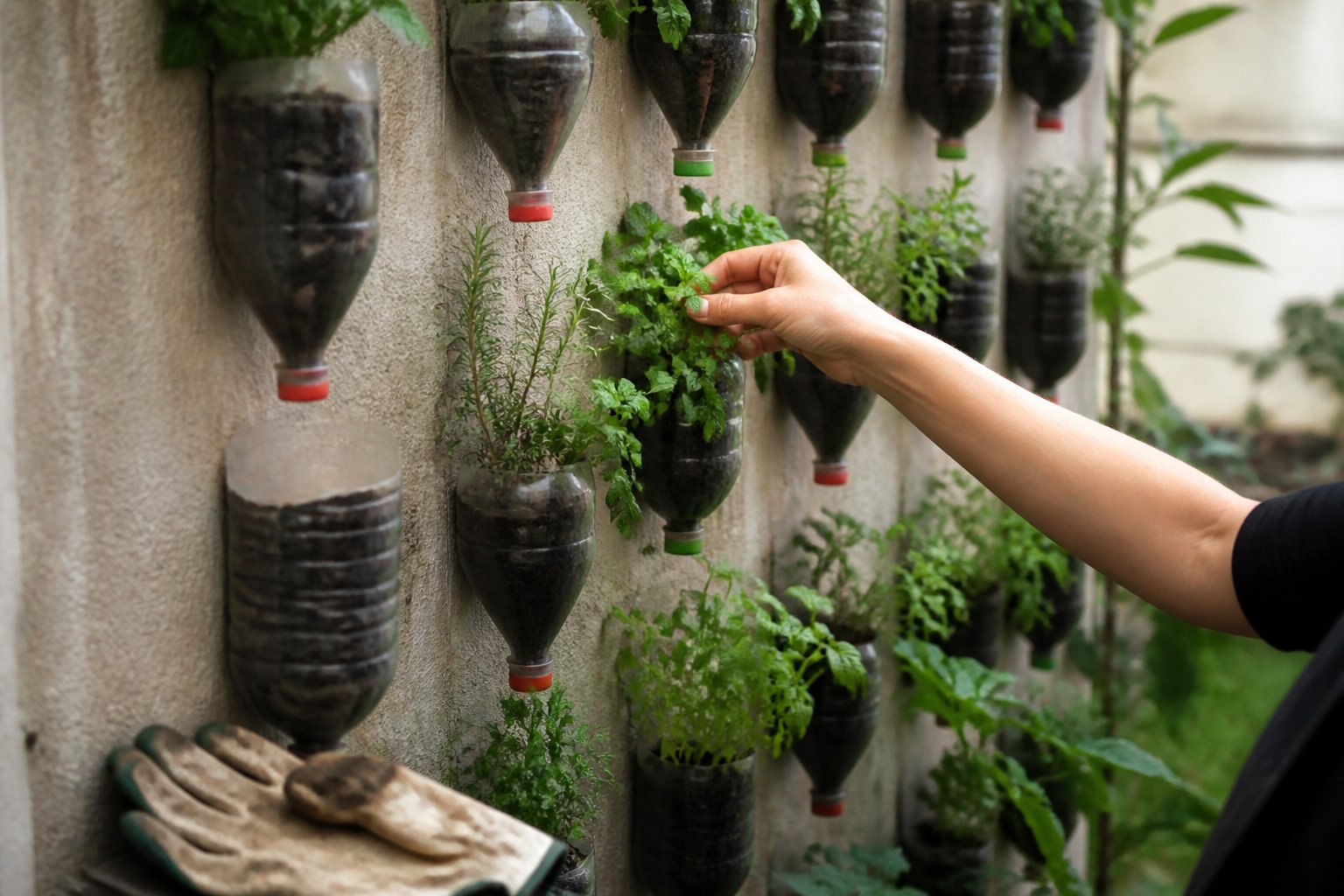
Turn plastic bottles into a tidy herb wall you can hang on a fence or balcony. You’ll cut bottles, add drainage holes, and mount them in rows so basil, mint, and chives all get sun without taking up floor space.
Use sturdy twine or zip ties through punched holes near each bottle neck. Stack them staggered to let water drip down, and line the bottoms with small pebbles to stop soil loss. A common mistake is planting deep-rooted herbs — stick to shallow-rooted varieties or they’ll crowd the bottles fast.
Try labeling bottles and rotating them every few weeks for even growth. If a plant wilts, swap bottles to check the roots; often it’s just compacted soil or poor drainage. Experiment with spacing until your wall looks full but not crowded.
3) Modular Pallet Vertical Salad Rack
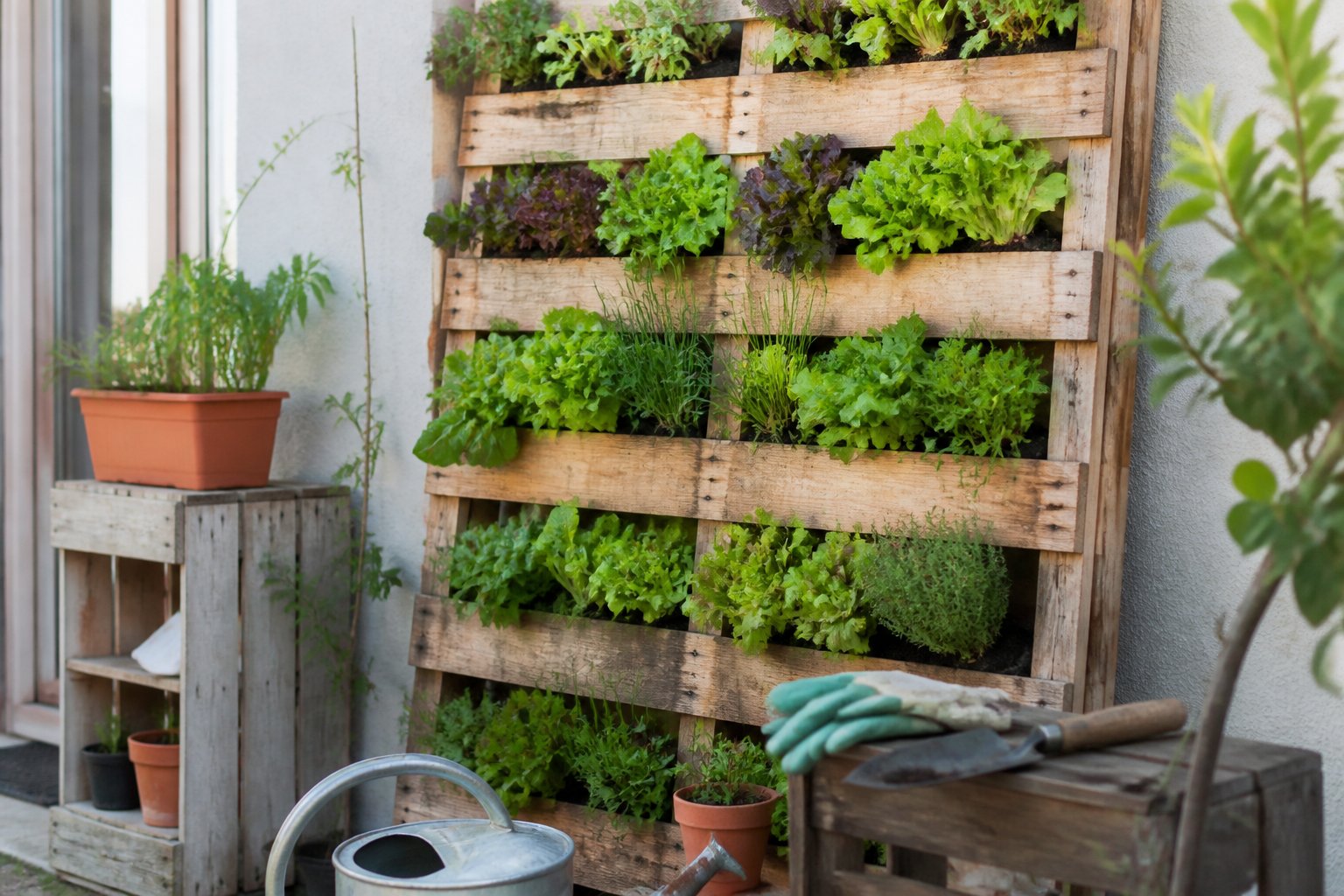
Build a modular pallet rack for growing salad greens in tight spaces. Start with a clean pallet, reinforce the frame, and line sections with landscape fabric or planter trays so soil won’t slip through.
Stack modules so you can add or remove tiers as needed. Use shallow trays for lettuces and deeper ones for root herbs — this keeps roots happy and watering easier. A common mistake is overloading the pallet; secure each level and anchor the whole rack to a wall or post.
Rotate harvests by swapping trays every two to four weeks. You’ll get steady cut-and-come-again greens without replanting the whole rack. Try mixing leaf lettuce, arugula, and baby spinach for continuous variety and faster yields.
4) A-Frame Tiered Tomato & Pepper Stand
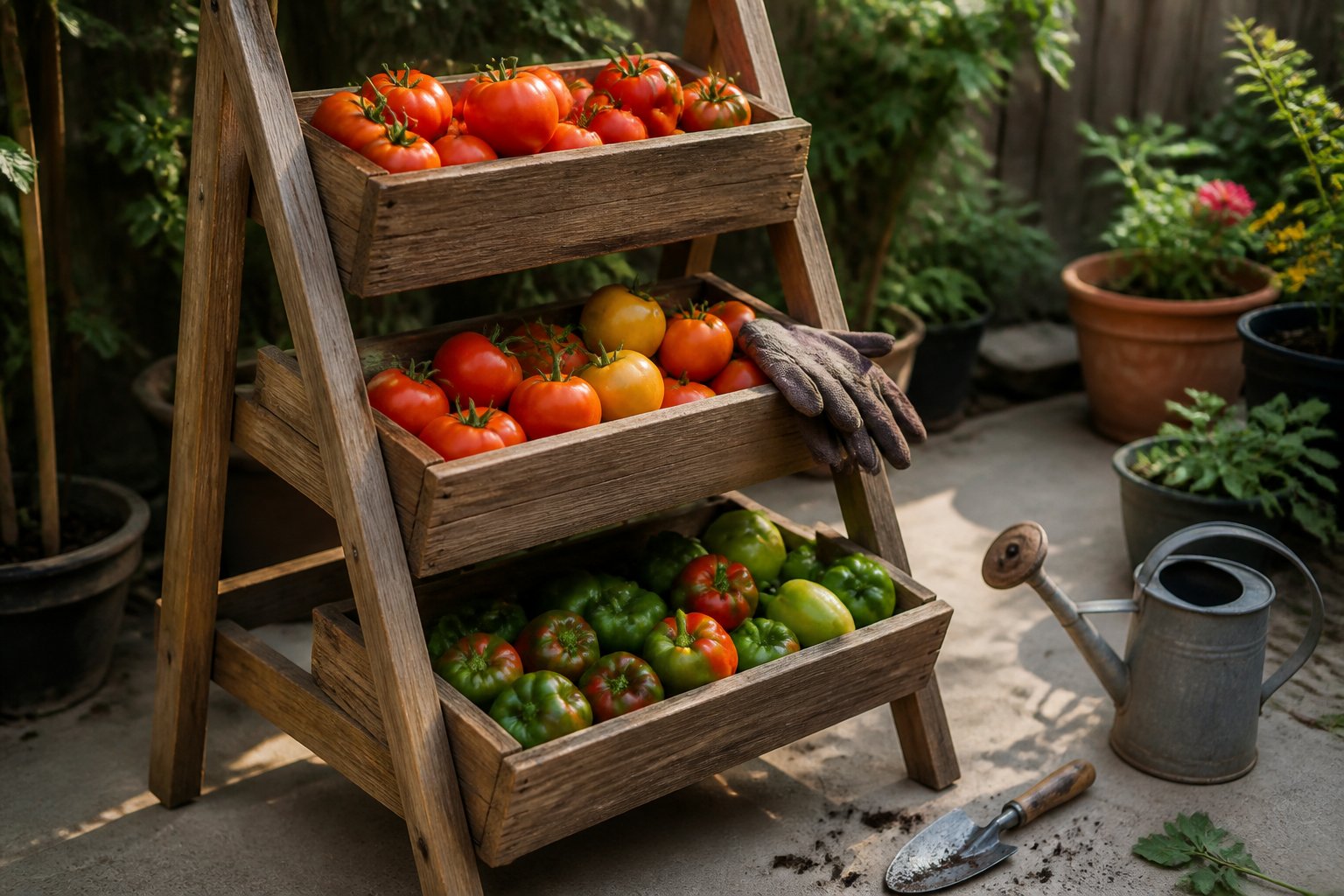
Build an A-frame with two tiers to give tomatoes and peppers vertical room without crowding. Use treated lumber or cedar, and brace the legs so the frame stays square when the plants grow heavy.
Plant larger tomato varieties on the bottom tier and indeterminate or climbing peppers above to balance weight and light. Tie stems gently to the frame, and avoid tight knots that can cut into the plant.
Common mistake: letting soil dry out in high pots. Add a thick layer of mulch and consider a simple drip line to keep water even — you’ll harvest more per square foot and keep plants healthier.
Try one 3–4 foot stand first to test placement and sun exposure. If it works, replicate it along a sunny balcony or fence.
5) Vertical Gutter Strawberry Wall
Turn old gutters into a productive strawberry wall you can hang on a fence or lean against a sunny wall.
Cut gutters into 3–4 foot lengths and drill drainage holes. Space plants about 6–8 inches apart so runners don’t tangle. Use a well-draining potting mix and tuck young plants into the troughs with their crowns level with the soil.
Mount tiers on strong brackets or wire cable, securing the top row first. Water from the top or use a soaker drip to keep moisture even — overwatering is the most common mistake. Rotate crops yearly to avoid soil disease.
Try alpine or everbearing varieties for steady harvests. If birds find your berries, add netting briefly, and consider building one small section first to learn spacing and care.
6) DIY Shoe-Organizer Herb Pocket Garden
Hang a fabric shoe organizer on a sunny wall and turn wasted vertical space into a quick herb patch. This method fits small balconies and apartment walls, and it saves room compared with pots on a ledge.
Fill each pocket with lightweight potting mix and start with transplants like basil, mint, and thyme for fast results. Water from the top; expect some drainage through the pockets, so line the back with plastic if you’re worried about runoff.
A common mistake is overfilling pockets — use less soil so roots can breathe and pockets don’t sag. If pockets droop, move heavier plants lower and rotate new cuttings into the empty slots.
Try grouping plants by water need to make care easier, and check the organizer weekly, pinching herbs to encourage bushy growth.
7) Geotextile Fabric Grow Bag Living Wall
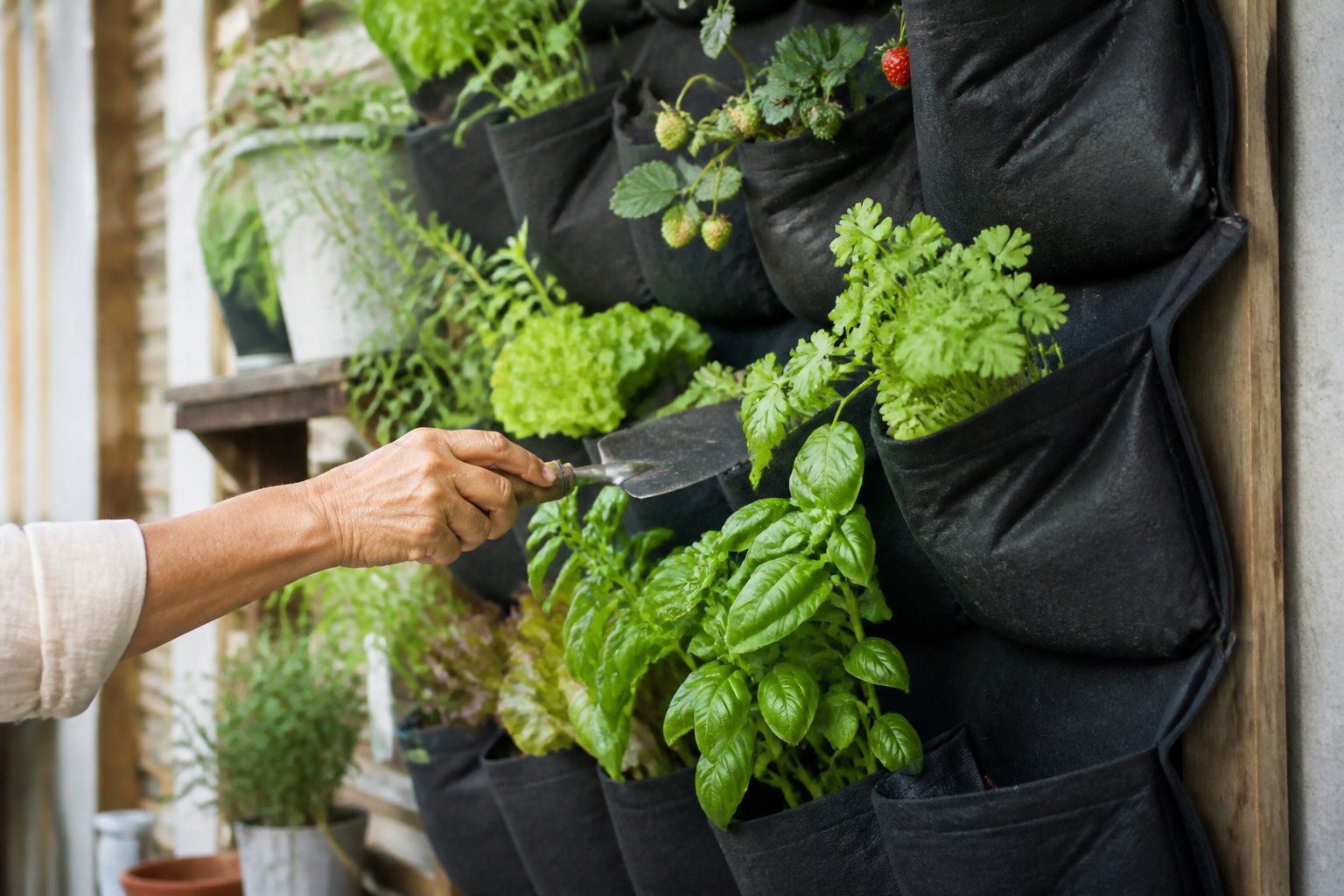
Hang geotextile grow bags on a fence or wall to make a slim, productive garden. Start with sturdy bags and a strong frame — overloaded bags will pull brackets loose.
Plant shallow-rooted lettuces, herbs, and strawberries for quick wins. Rotate crops and check soil moisture daily, since these bags dry out faster than beds.
A common mistake is overfilling with heavy soil. Use a lightweight mix and stagger bag sizes to balance weight and water flow.
Place sun-loving plants at the top of the wall, try stacking modular bags, and tweak spacing until watering runs evenly.
8) Trellised Cucumber & Pole-Bean Teepee
Build a teepee trellis that saves space and lifts heavy vines off the soil. Use long bamboo or poles lashed at the top to form a stable cone, then plant around the base and train vines upward.
Cucumbers and pole beans climb differently, so plant them on opposite sides of the teepee for better airflow and easier harvesting. Tie young stems loosely with garden twine and check ties every week to avoid girdling.
A common mistake is using weak poles or wide spacing — your structure needs to handle both weight and wind. Try one teepee per 3–4 plants and adjust for heavy fruit loads.
9) Hydroponic NFT Vertical Tower System
Use an NFT (Nutrient Film Technique) tower when you want fast growth and minimal media.
You run a thin film of nutrient solution down angled channels inside a tower. Plants sit in small net pots so roots touch the flowing film and grab oxygen — this boosts growth and saves space compared with pots.
Start with leafy greens and herbs, since lettuce and basil handle the fast flow well. A common mistake is overfilling channels, which drowns roots and invites disease. Stick to clean media and a fine pre-filter to avoid clogging.
Monitor pump cycles and pH daily for steady yields. If a pump fails, rotate towers to avoid total crop loss. Try one tower first, then scale to a wall of towers once you’ve dialed in the flow and nutrient strength.
10) Self-Watering PVC Pipe Strawberry Tower
This compact, self-watering strawberry tower comes together in a weekend. Use a wide-diameter PVC pipe, cut planting holes, and add a central reservoir tube to feed water down the core.
Start with clean pipe and a drip or wick system from the inner column to each planting level. Use a light potting mix and plant bareroot or young strawberry runners for fast establishment. Space holes so leaves don’t crowd each other — overcrowding causes mold and fewer berries.
Common mistakes include using heavy garden soil, skipping drainage holes, or placing the tower in deep shade. Test the reservoir by filling it and watching the flow; adjust hole size until water wets the roots but doesn’t wash soil out.