12 Gorgeous Sliding Barn Door Ideas to Elevate Your Home’s Style and Functionality for Every Room
A sliding barn door can add character while helping you manage tight spaces. As you explore different designs, you’ll see how wood, glass, paint, mirrors, and metal can shape the look and function of a room.
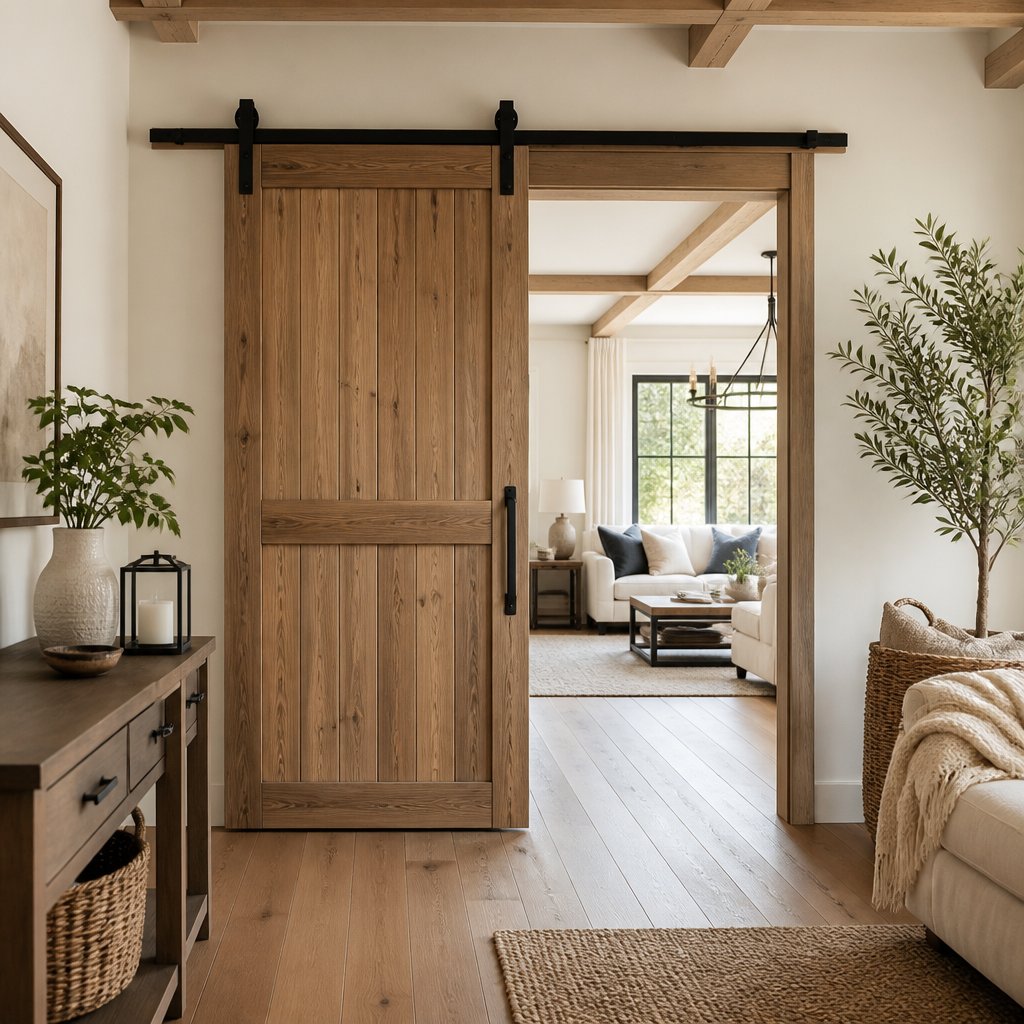
You can choose a barn door that matches your style, fits your opening, and works well with your available space. Explore options from rustic reclaimed wood to clean white shiplap, bold colors, glass panels, and double-door layouts. You’ll also learn what to consider when choosing the size, track, clearance, hardware, installation method, and upkeep.
1) Rustic Reclaimed-Wood Door
A rustic reclaimed-wood barn door adds warmth, texture, and natural character to your room. Visible knots, grain patterns, and small marks give each door a distinct look.
Choose a finish that suits your decor. A clear coat preserves the wood’s natural color, while a light stain or painted surface can better match farmhouse, traditional, or modern interiors. You can find more reclaimed-wood sliding barn door ideas for bedrooms, offices, kitchens, and entryways.
Before installation, confirm that the door covers the opening and that the wall can support the track. Add a sturdy metal track and handles that complement the wood. Reclaimed boards may need cleaning, sanding, and sealing before use.
2) Modern White Shiplap Door
A modern white shiplap barn door gives your room a clean, bright look while adding useful texture. Its horizontal boards work well with farmhouse, coastal, Scandinavian, and transitional interiors.
Choose a smooth white finish for a polished style, or use a lightly distressed surface for more character. Black, brass, or brushed nickel hardware can create a clear contrast and tie the door to other fixtures in your room.
Use this design for a pantry, laundry room, closet, or home office. Before installing it, confirm that you have enough clear wall space beside the opening and that the door overlaps the opening properly. Browse these shiplap barn door ideas for more design options.
3) Black-and-Natural-Wood Two-Tone Door
Pair a black finish with natural wood to create a balanced sliding barn door. The dark surface adds contrast, while the visible grain brings warmth and texture to the room.
You can use black on the outer frame or one side of the door and leave the wood panels in a clear or lightly stained finish. This approach works well with neutral walls, light floors, and metal fixtures.
Choose matte black hardware to match the door’s darker elements. Before installing it, confirm that the wall can support the track and that the door covers the opening fully when closed. A black barn door with glass inserts offers another option if you want to let in light.
4) Sliding Glass Barn Door
A sliding glass barn door lets you separate rooms while keeping light moving through your home. Choose clear glass for an open feel, or select frosted glass when you need more privacy, such as for a bathroom, office, or bedroom. Explore modern frosted glass barn door designs for ideas.
Pair the glass panel with a black metal track for a modern look, or use a wood frame to add warmth. Before you install it, check that the wall has enough clear space for the door to slide and that the hardware can support its weight.
Use tempered or laminated safety glass, especially in busy areas. Add a soft-close system to reduce noise and help protect the door and wall.
5) Double Barn Doors for Wide Openings
Double barn doors work well when a single door cannot cover a wide opening. Two sliding panels meet in the center, making them a practical choice for room dividers, dining areas, bedrooms, and wide closets. Explore double barn doors for wide interior openings to compare common designs and hardware options.
Choose wood panels for a warm farmhouse look, or use clean lines and neutral finishes for a modern room. You can also select solid, primed, mirrored, or custom-style doors to match your interior.
Before buying, measure the opening and the wall space beside it. Each panel needs enough room to slide fully clear, while the wall and header must support the track hardware.
6) Chevron-Pattern Wood Door
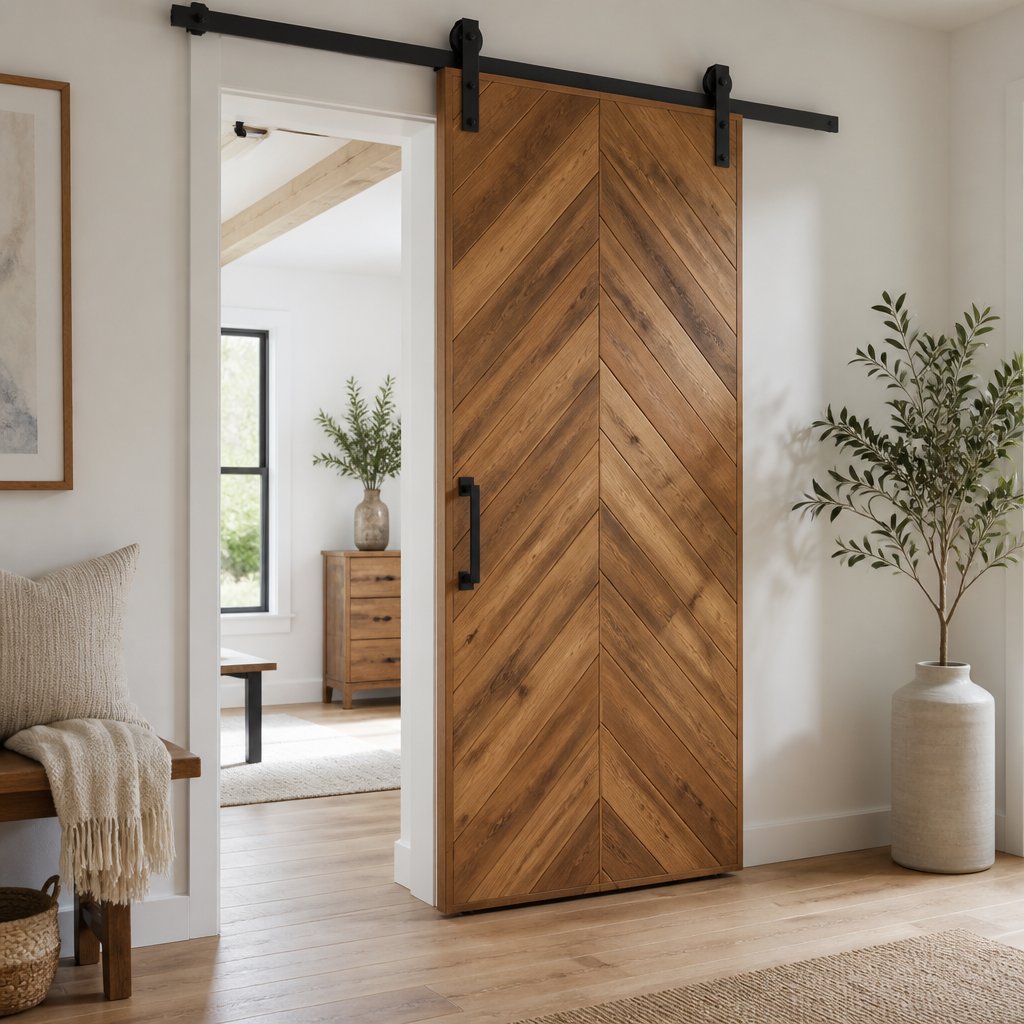
A chevron-pattern wood door adds visual structure without overwhelming your room. Angled boards meet at the center, creating a clean geometric design that suits modern farmhouse, Craftsman, and contemporary interiors.
Choose solid wood for a sturdy feel, or select a manufactured option for a lighter, more budget-friendly door. You can leave the grain visible, apply a stain, or paint the surface to match your trim and furniture.
Before installation, check that the wall has enough clear space for the door to slide fully open. You also need a strong mounting surface and hardware rated for the door’s weight. Browse chevron barn door designs to compare styles and finishes.
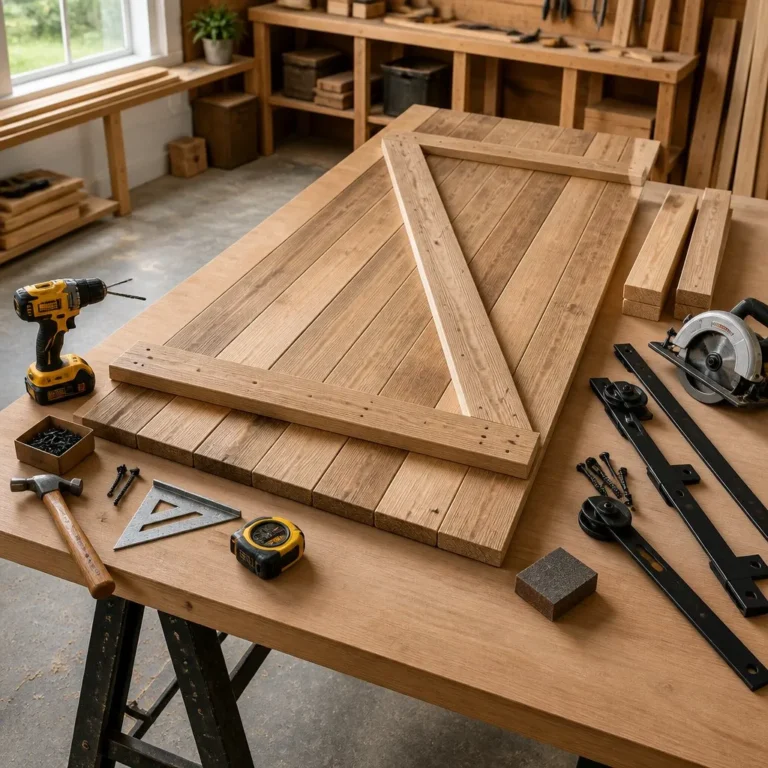
7) X-Panel Farmhouse Door
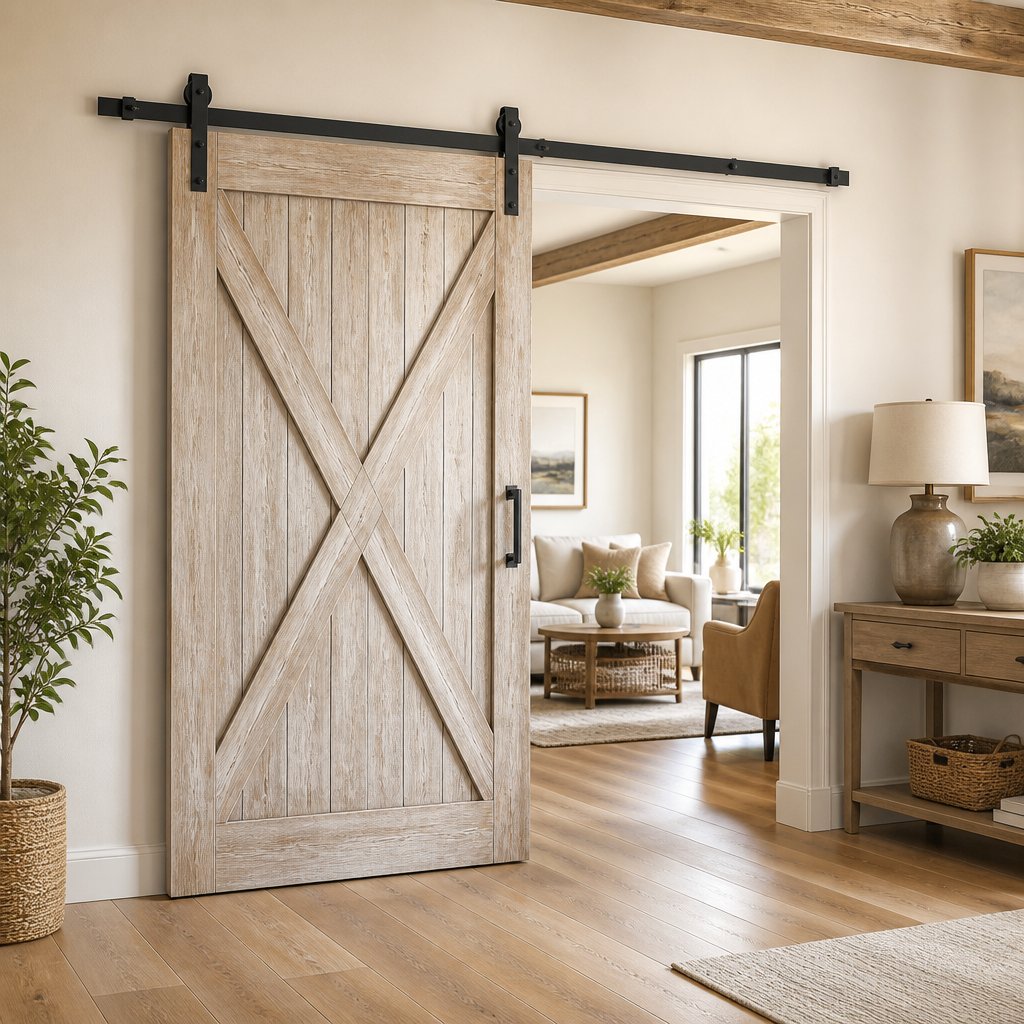
An X-panel farmhouse door gives your room a strong rural detail without adding visual clutter. Its diagonal braces create a clear pattern across the wood and pair well with shiplap walls, exposed beams, and simple metal hardware.
You can choose a stained finish to highlight the wood grain or select a painted color for a cleaner look. Designs such as the Full X sliding barn door offer several finish options to help you match your existing decor.
Before installation, check that your wall has enough clear space for the door to slide fully open. You also need a track and mounting system that can support the door’s weight.
8) Bold Navy Painted Barn Door
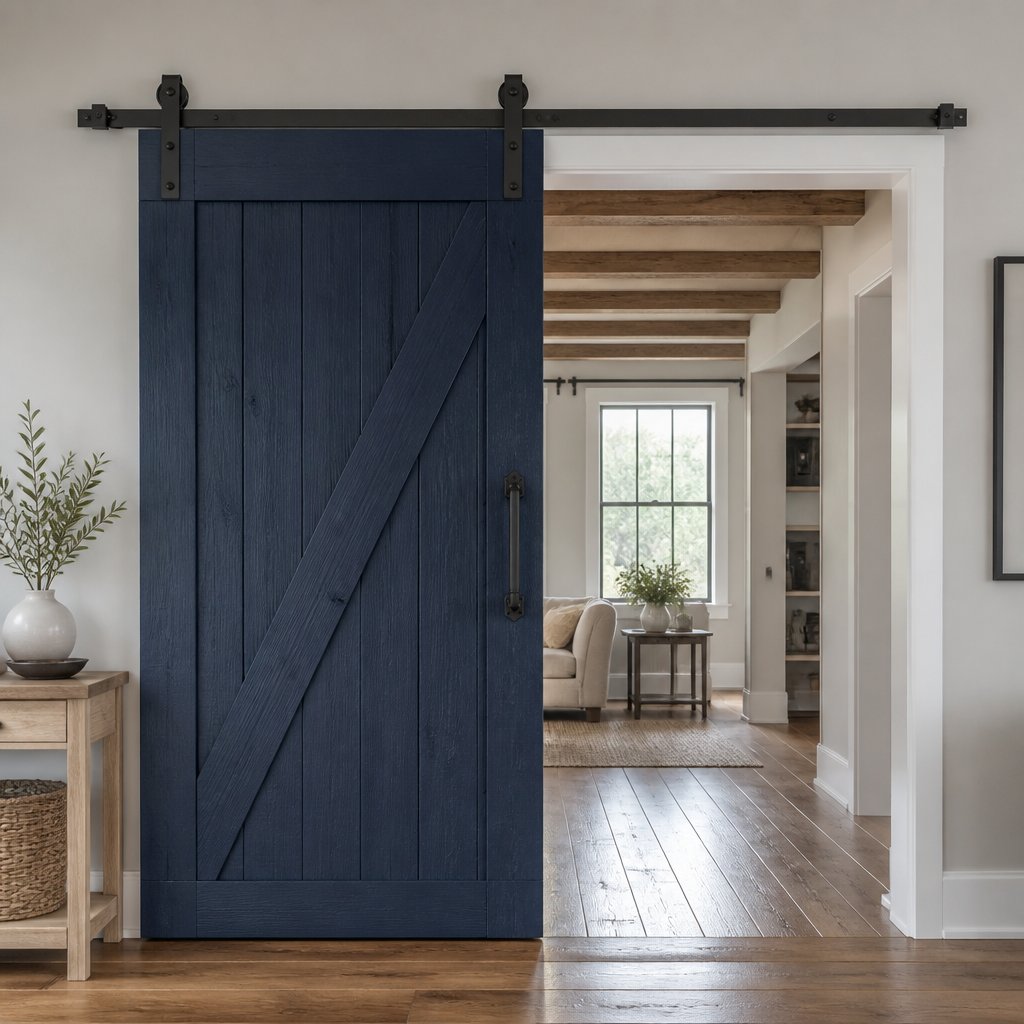
A navy-painted barn door adds rich color without overpowering your room. Its deep blue finish suits farmhouse, coastal, traditional, and modern interiors.
Use the door to create contrast against white walls, light wood, or warm neutral paint. Choose a matte finish for a softer look or a satin finish when you want the color to reflect more light.
Pair the door with black, brass, or brushed steel hardware to support your design style. Before painting, clean and sand the surface, then apply a suitable primer and durable paint for an even finish.
Browse navy barn door ideas for ways to coordinate the color with nearby furnishings.
9) Industrial Metal-and-Wood Door
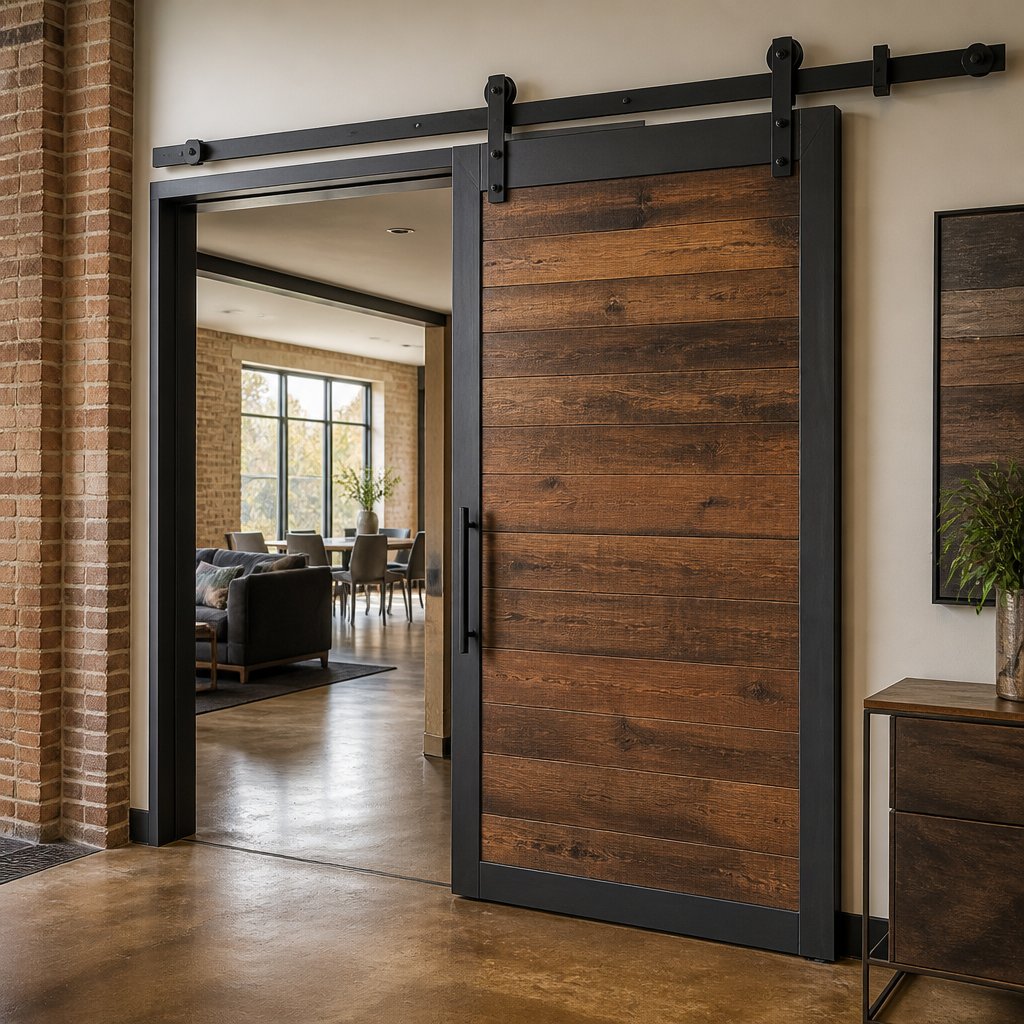
Pair a dark metal frame with warm wood panels to create a balanced industrial look. You get the texture and character of wood while the metal adds clean lines and a stronger modern edge.
Choose reclaimed wood for a rustic feel, or use smooth, stained boards for a more polished design. This style works well in living rooms, offices, pantries, and bedrooms where you want the door to stand out without taking over the space.
Complete the design with a black steel track and simple hardware. Before installation, make sure your wall can support the door and that you have enough clear wall space for it to slide open. Explore industrial metal-and-wood door designs for more ideas.
10) Mirrored Barn Door for Bedrooms
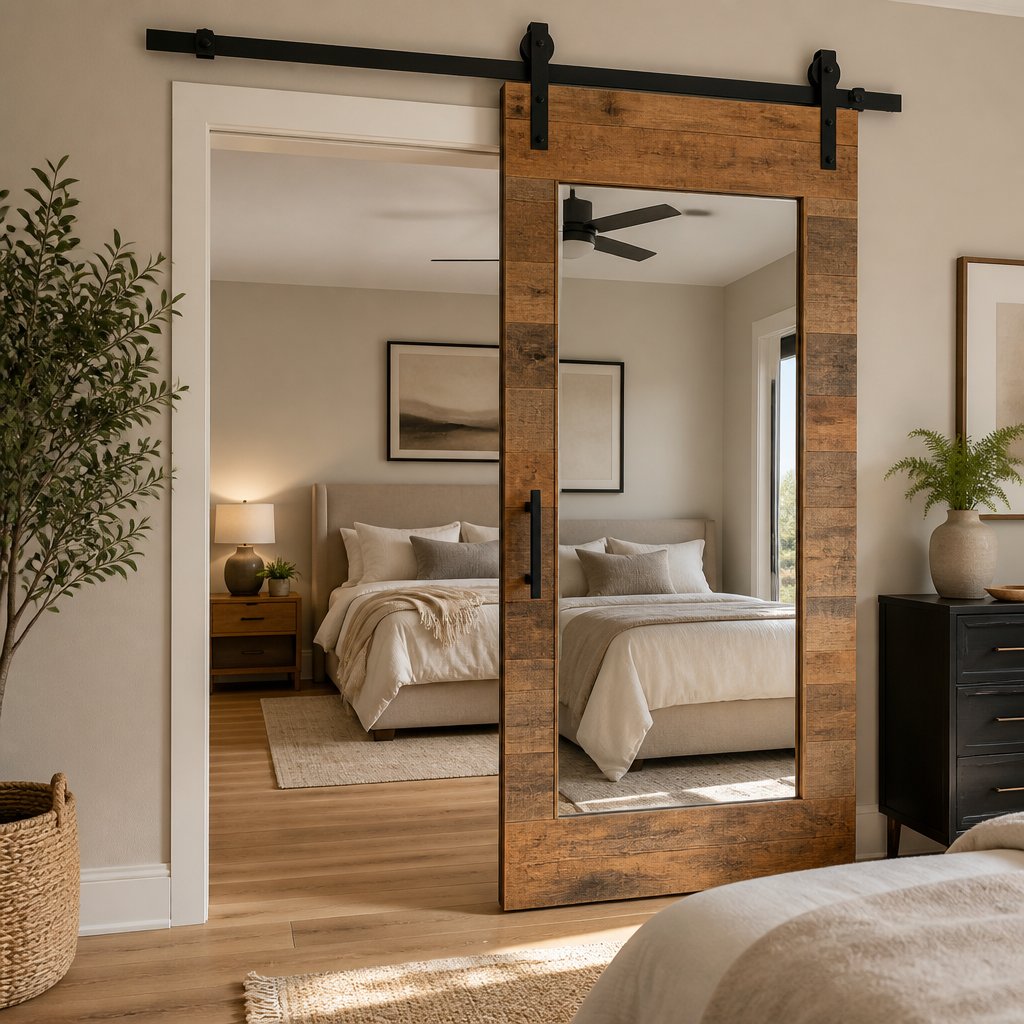
A mirrored barn door can separate your bedroom from a closet or bathroom while giving you a full-length reflection. It also slides along the wall, so you do not need room for a swinging door.
Choose a frame that matches your bedroom style. Natural wood adds warmth, while black or painted metal creates a cleaner, modern look. Make sure the wall has enough clear space for the door to slide open.
Before installation, check that your wall and hardware can support the door’s weight. A mirrored barn door kit can simplify the project because the mirror, door, and sliding system are designed to work together. Use safety film or tempered glass when available.
Planning For Size, Clearance, And Hardware
Accurate measurements help you choose a door that covers the opening and moves freely. The right track length, roller capacity, and wall clearance also prevent binding, scraping, and blocked trim.
Measuring Door Openings And Wall Space
Measure the opening width at the top, middle, and bottom. Use the widest measurement, then add overlap on both sides so the closed door fully covers the opening. A common starting point is 1–2 inches of overlap per side, but check your trim and the door’s design.
Measure the opening height from the finished floor to the top of the frame. Leave space below the door for smooth movement, while keeping the gap small enough to limit light and drafts. Confirm that the wall beside the opening has enough clear space for the door to slide completely open.
Check for baseboards, outlets, switches, vents, and nearby corners. The door must sit far enough from the wall to clear these features. For larger or heavier doors, verify that solid framing or a mounting board sits behind the track; drywall anchors alone may not support the load.
Selecting Track Systems And Rollers
Choose a track that extends beyond the opening far enough for the door to clear the passage. For a single door, the track often needs the opening width plus the amount of side clearance required to park the door. Follow the hardware maker’s spacing and weight ratings rather than estimating.
Select rollers and brackets that match the door’s weight and thickness. Steel hardware suits heavy wood doors, while lighter doors may use smaller rated systems. Use a floor guide to keep the bottom edge from swinging, and install door stops at both ends of the track.
A bypass system works when two doors must slide past each other in limited wall space. For wider openings, choose a track designed for the combined load. Follow the manufacturer’s instructions for track height, bolt spacing, and fastener type; these details vary by system. For step-by-step planning and installation details, review this modern sliding barn door guide.
Installation And Long-Term Maintenance
A properly supported track keeps your door stable, quiet, and easy to move. Regular cleaning, hardware checks, and finish-specific care help prevent damage and preserve the door’s appearance.
Ensuring Secure Mounting And Smooth Operation
Mount the track to the wall’s structural framing, not only to drywall. Use a header board secured to studs when the track holes do not align with them. Follow the hardware manufacturer’s weight limit, and confirm that the track extends far enough for the door to clear the opening fully.
Install the rollers, spacers, floor guide, and anti-jump devices according to the kit instructions. The floor guide keeps the door from swinging, while anti-jump stops help prevent the door from lifting off the track. Keep the track level; even a small slope can cause the door to roll open or closed.
After installation, slide the door several times and check for rubbing, scraping, or loose movement. Tighten fasteners after the first few uses, then inspect them every few months. Remove dust from the track with a soft brush or vacuum, and use only a lubricant approved for the hardware.
Caring For Wood, Glass, And Metal Finishes
Protect unfinished or painted wood from moisture. Wipe spills quickly, clean the surface with a slightly damp cloth, and avoid soaking the door. Use a wood-safe cleaner, and recoat worn areas according to the finish manufacturer’s instructions. Check the edges and bottom of the door because these areas often absorb moisture first.
Clean glass panels with a mild glass cleaner and a soft cloth. Do not spray cleaner directly onto wood, seals, or metal hardware. Inspect the glass for chips or cracks, especially near handles and mounting points, and stop using the door if you find structural damage.
For steel or aluminum parts, wipe away fingerprints and dust with a dry or damp cloth. Dry the hardware fully to limit rust and water spots. Avoid abrasive pads and harsh chemicals, which can scratch protective coatings. If rust appears, remove it early with a product designed for that metal finish.