Winterizing Your Mobile Home Skirting: A Complete Guide For 2026 With 10 Essential Tips
Winter can expose weak spots in your mobile home skirting, allowing cold air, pests, and moisture to reach the space beneath your home. This guide helps you understand the main steps for preparing your skirting and plumbing before freezing weather arrives.
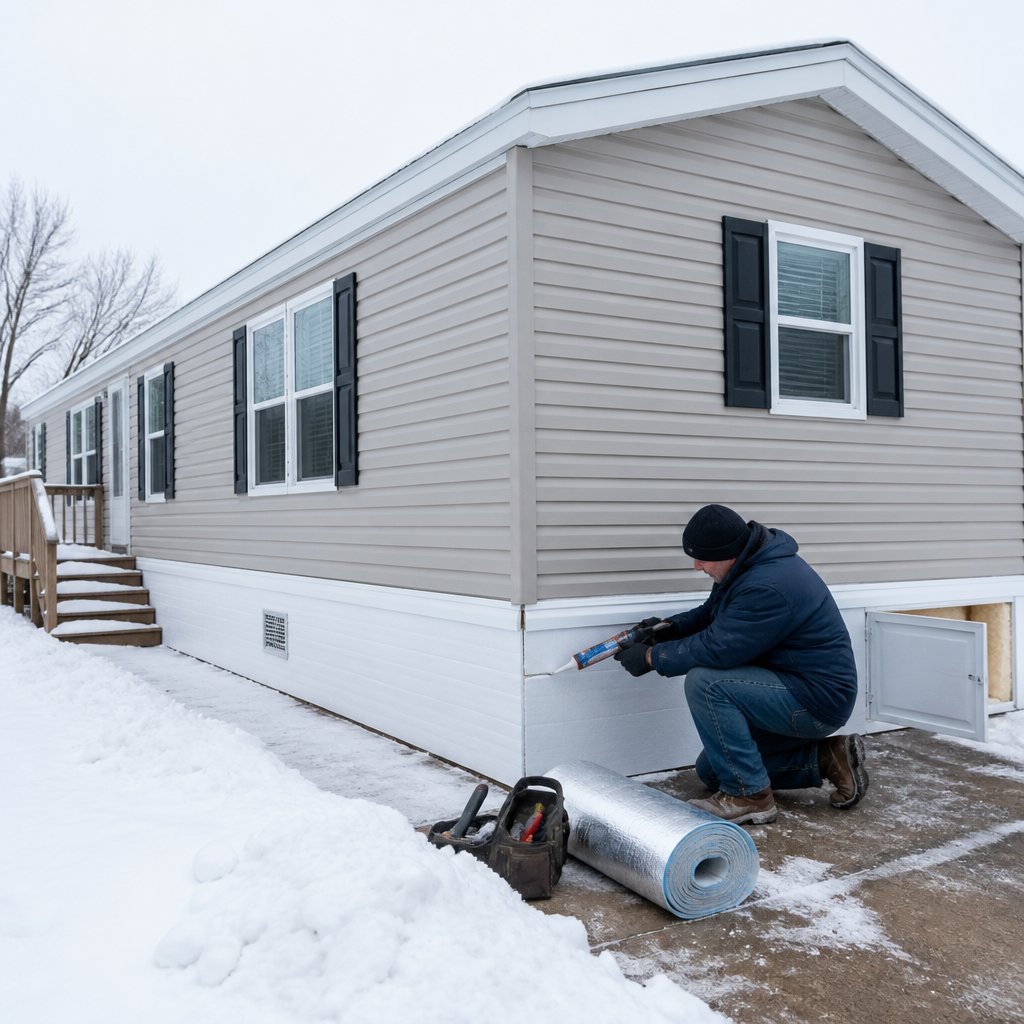
You can reduce cold-weather risks by inspecting, sealing, insulating, and maintaining your skirting without blocking needed ventilation. You will also learn how snow, wind, shifting ground, and seasonal wear affect performance, plus when professional help makes sense.
1) Inspect and repair skirting panels before freezing weather
Walk around your mobile home and inspect every skirting panel before temperatures drop. Look for cracks, loose sections, gaps, bent tracks, and missing fasteners. Pay close attention to corners and areas near steps, vents, and utility lines.
Replace panels with major damage, and secure loose panels with compatible clips or screws. Seal small gaps with materials made for your skirting type, but do not block required vents. Proper repairs help limit cold air, pests, and moisture beneath the home.
Check that the bottom edge stays firmly in place. For practical repair steps, review this mobile home skirting repair guide.
2) Seal gaps around the perimeter to block drafts and pests
Inspect the full skirting perimeter for cracks, loose panels, and open joints. Check corners, access doors, utility openings, and the area where the skirting meets the ground.
Use exterior-grade caulk for narrow cracks and gaps between fixed materials. For larger openings, install compatible trim, flashing, or a small piece of skirting material before sealing the edges.
Secure loose panels with approved fasteners so wind cannot create new openings. Do not seal required ventilation openings, and keep access panels usable for inspections and repairs.
Close gaps around pipes and cables with materials rated for outdoor use. Avoid blocking drainage paths, since trapped water can damage the skirting and attract pests.
3) Insulate exposed water pipes beneath the home
Inspect the pipes beneath your mobile home for cracks, leaks, and damaged insulation. Focus on sections near gaps in the skirting, vents, and exterior walls, where cold air can reach the plumbing.
Wrap water supply pipes with foam pipe insulation sized for each pipe. Seal the insulation joints with approved tape, but do not compress it. Keep insulation away from heat-producing equipment and protect it from moisture and pests.
Repair gaps in the underbelly before adding insulation. In severe cold, let a faucet drip slightly if local conditions allow, and know where your main shutoff valve is located. If you plan to leave the home unheated, shut off the water and drain the plumbing; this guide explains the basic process.
4) Install thermostatically controlled heat tape on vulnerable pipes
Choose heat tape approved for water pipes and outdoor or crawlspace use. A thermostat turns the tape on when temperatures drop, helping protect exposed plumbing beneath your mobile home.
Inspect pipes first, then clean and dry them. Follow the product instructions for spacing and placement. Do not overlap the tape, cover it with other insulation unless the instructions allow it, or use damaged tape. This heat tape guide provides installation tips for mobile homes.
Plug the tape into a grounded, code-compliant outlet with ground-fault protection. Keep connections dry, and do not use extension cords unless the manufacturer permits them. Check the tape during winter for damage, loose connections, or tripped protection.
5) Cover damaged underbelly material and seal air leaks
Inspect the underside for tears, loose sections, missing insulation, and gaps around pipes or ducts. Repair plumbing leaks and remove pests or nesting material before sealing the area.
Patch small tears with compatible underbelly material and approved belly repair tape. For larger damaged sections, attach new material securely to the frame without compressing the insulation.
Seal openings around utility lines with suitable foam or sealant. Keep vents and required drainage paths open, and avoid blocking access to shutoff valves or electrical components. These repairs help reduce drafts and keep insulation in place. Learn more about mobile home underbelly repair.
6) Maintain required ventilation to prevent moisture buildup
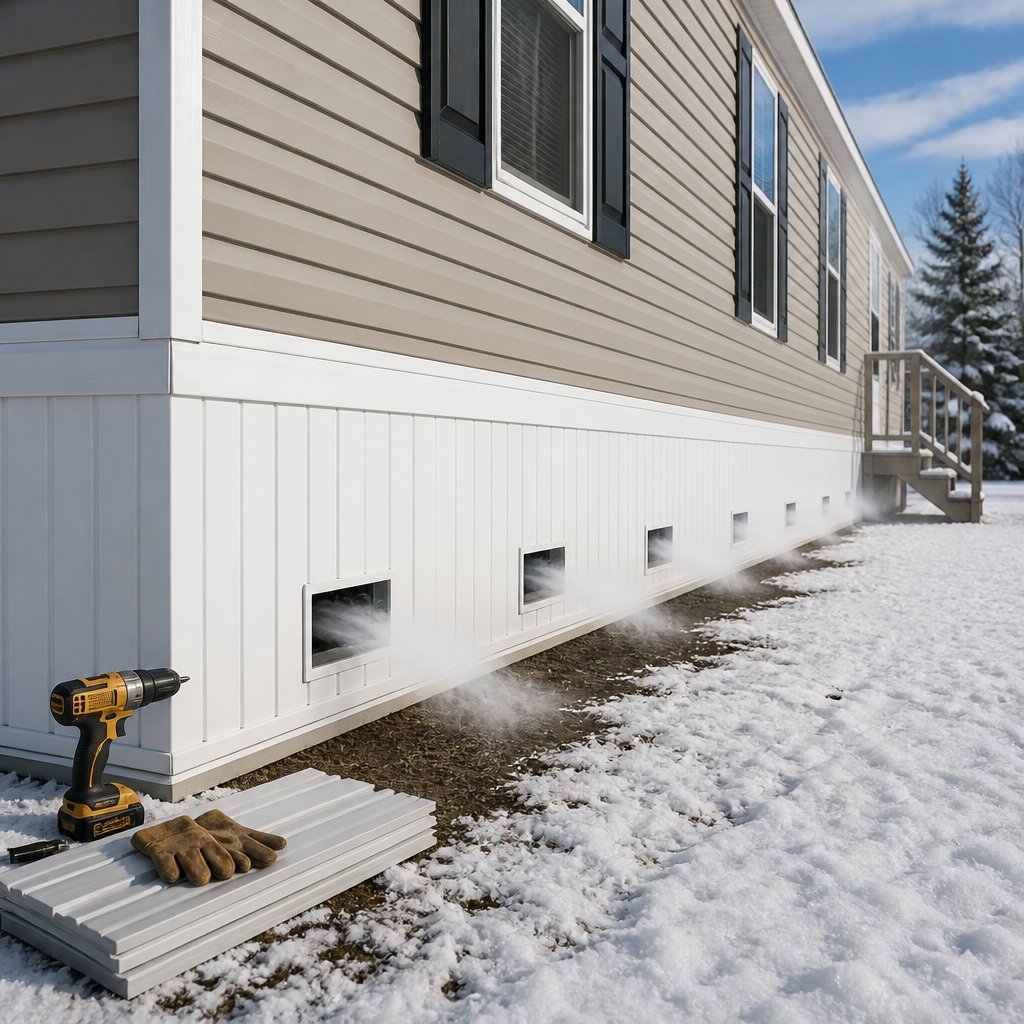
Keep skirting vents clear so air can move beneath your home. Ventilation helps reduce moisture from damp soil, plumbing leaks, and temperature changes, which can lead to mold, wood damage, or frozen pipes.
Follow your local building rules and the manufactured-home requirements for vent placement and total vent area. Use the requirements for mobile home skirting ventilation as a general reference, but check with your local authority before changing the layout.
Do not seal every opening for winter. Cover damaged vents with proper screened, louvered replacements, and keep vents above snow level. Also, repair ground drainage and use a suitable ground vapor barrier when needed.
7) Add rigid foam insulation behind compatible skirting panels
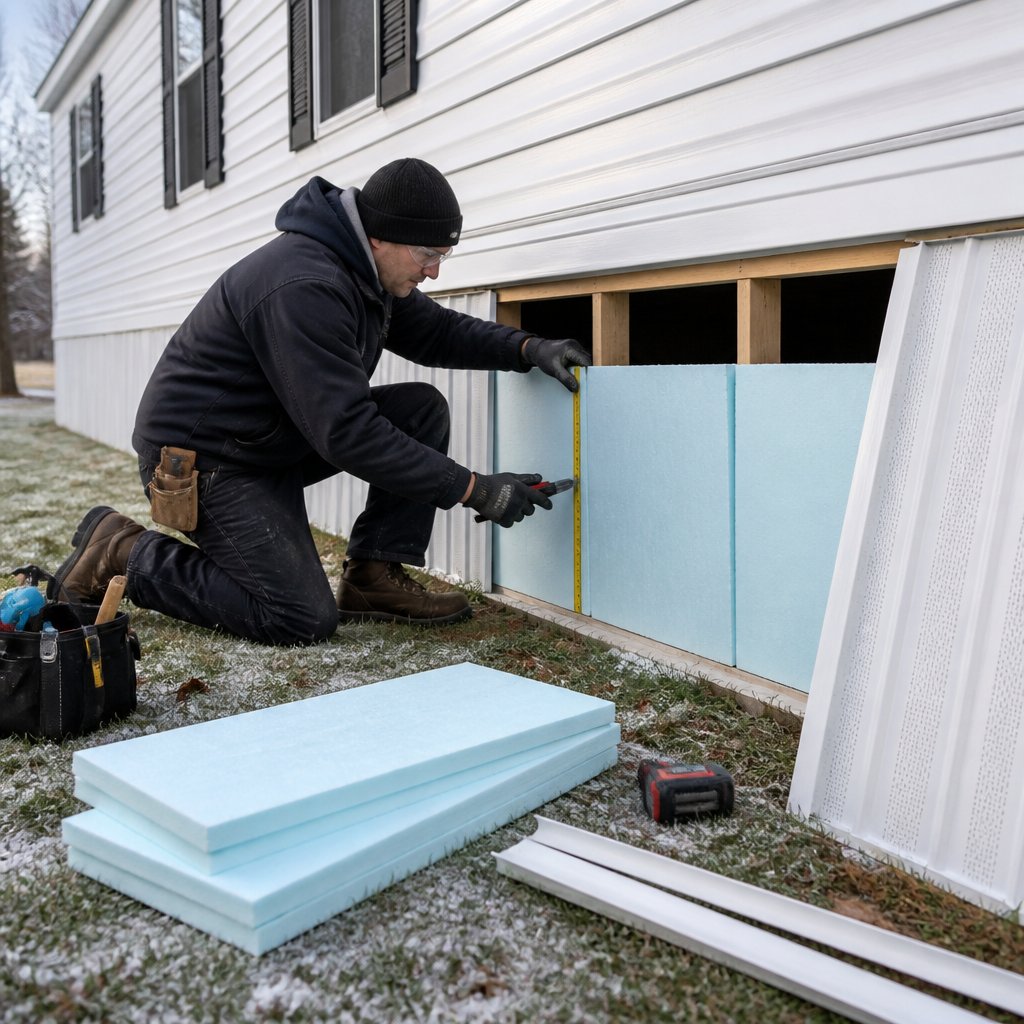
Choose rigid foam board that fits securely behind your skirting panels. A 2-inch closed-cell board can add insulation and resist moisture, but confirm that the panel system has enough space and ventilation for this installation.
Measure each opening, then cut the boards so they fit without large gaps. Seal small joints with compatible foam tape or caulk, while avoiding blocked access panels, plumbing vents, and required skirting vents.
Keep the foam above damp soil and protect exposed edges from water and pests. Do not install it where it could trap moisture against wood, wiring, or plumbing. Learn more about using foam board behind mobile home skirting.
8) Protect plumbing penetrations with weather-resistant sealant
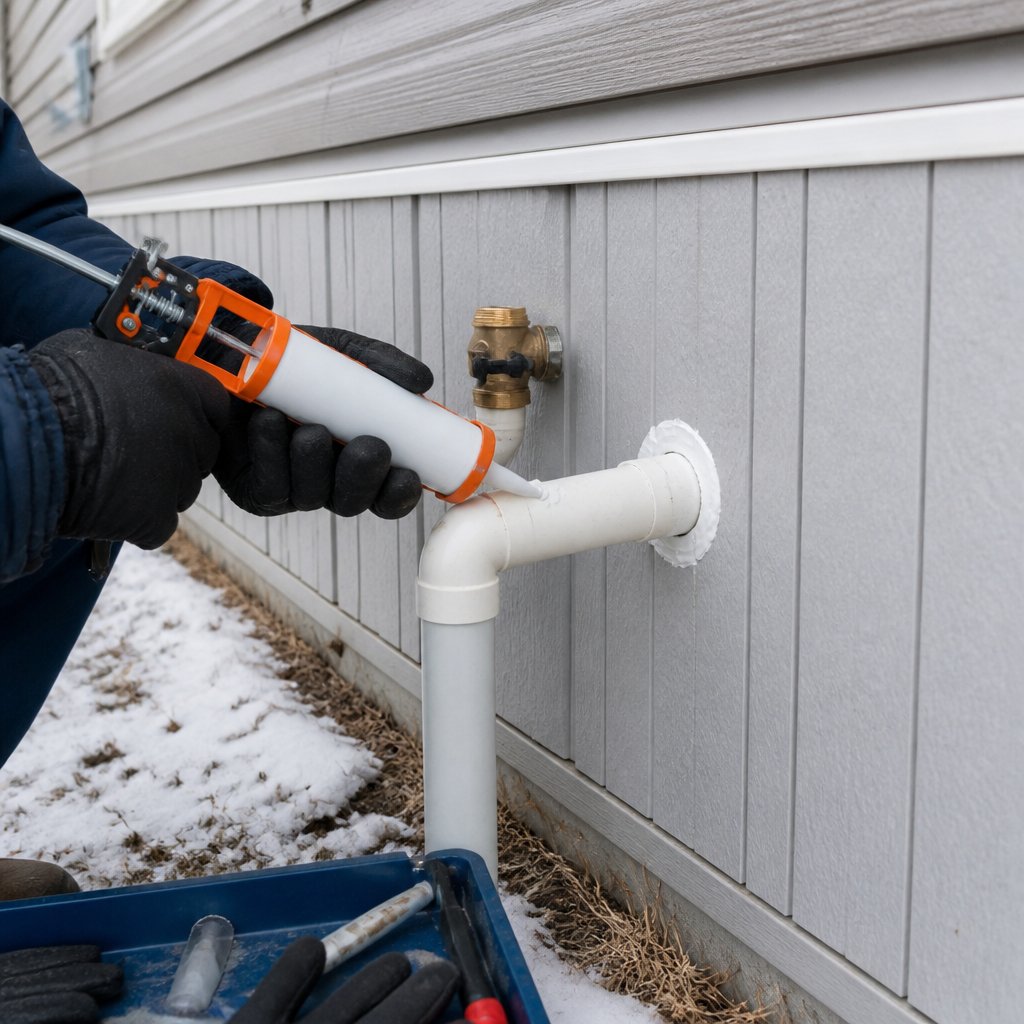
Inspect every spot where water lines, drainpipes, or other plumbing pass through the skirting. Look for gaps, cracks, and loose edges that could let cold air, wind, moisture, or pests enter.
Clean and dry the area before applying sealant. Use an exterior-grade, weather-resistant caulk or polyurethane sealant that bonds to both the skirting and the pipe. Follow the product label for surface preparation and curing time.
Do not seal over wet materials or damaged underbelly fabric. Repair loose skirting and replace torn material first, then seal around the penetration without blocking required drainage or ventilation. Also check the underbelly seal around plumbing penetrations for gaps.
9) Secure skirting against wind, snow, and shifting ground
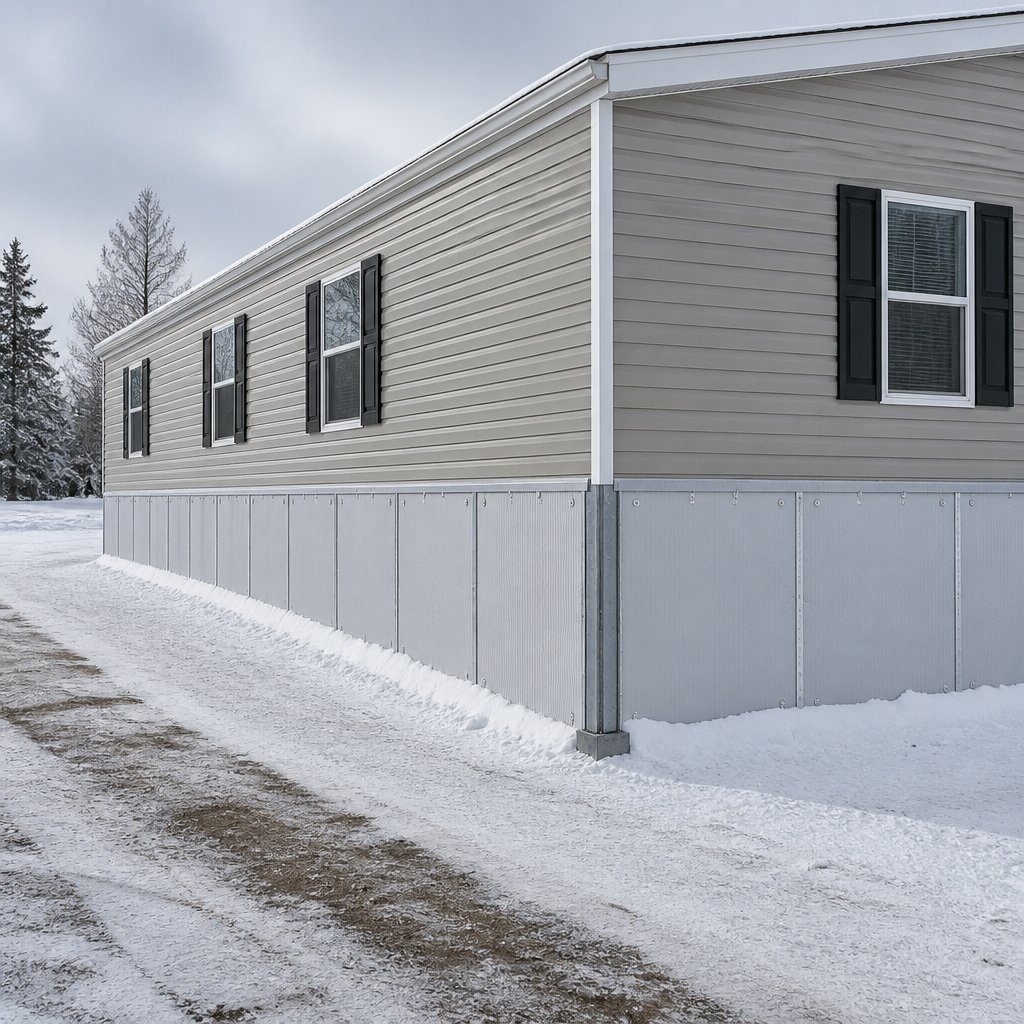
Inspect the full perimeter before winter. Close gaps between panels and at the ground, since openings let wind enter and allow animals to get underneath. Replace cracked panels, loose trim, and damaged fasteners.
Use the manufacturer’s ground channel, top track, and approved fasteners. On exposed sides, add ground anchors or other compatible supports rather than relying on loose blocks alone. Keep anchors clear of utility lines and follow local requirements.
After heavy snow, remove buildup that presses against the skirting. Do not pile shoveled snow against it. If the ground shifts, reset the channel and adjust panels so they remain upright without forcing them into place. A wind-proofing guide explains tension methods and anchoring options.
10) Clear leaves and debris from vents and access openings
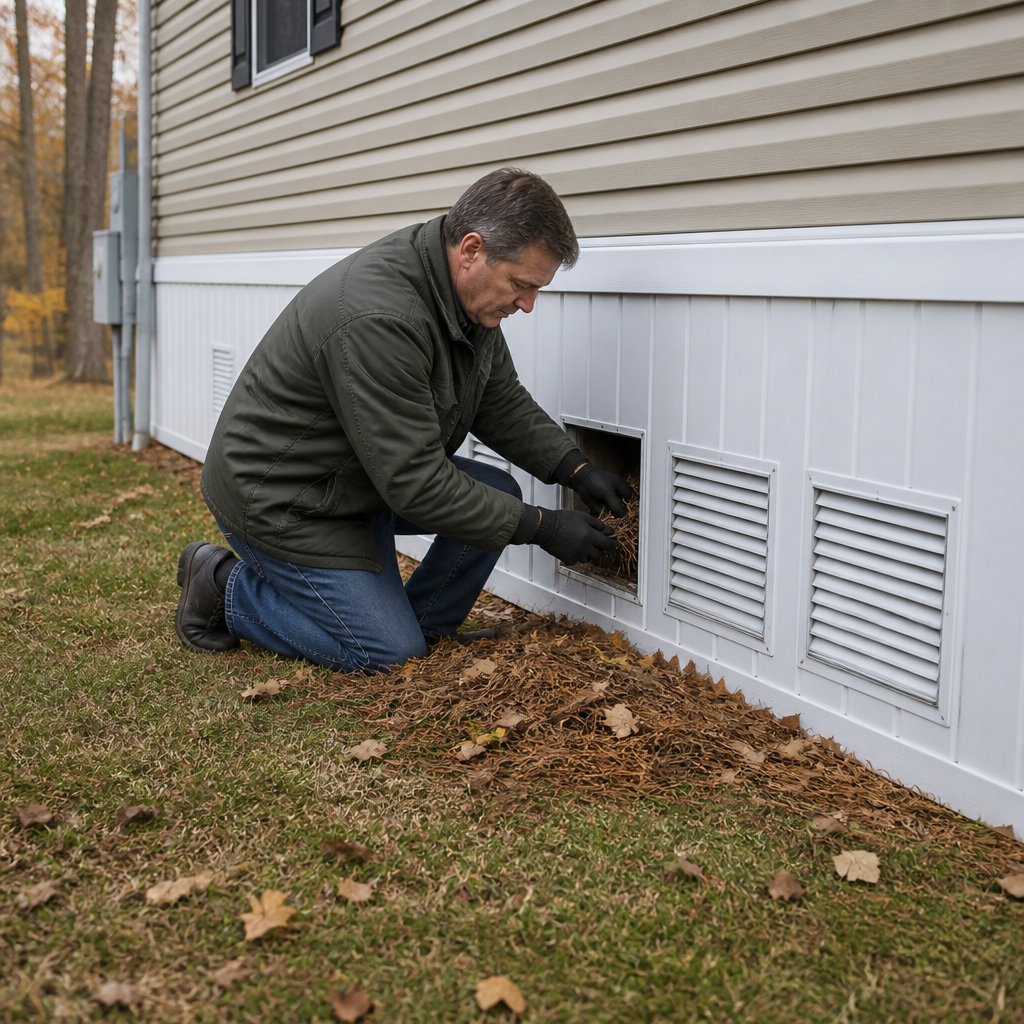
Remove leaves, grass, dirt, and other debris from vents in your mobile home skirting. Blocked vents can reduce airflow under the home and allow moisture to build up.
Check access panels, crawl-space doors, and openings around pipes. Clear debris without covering or sealing vents that provide needed airflow.
After storms, inspect the area again. Replace damaged vent covers and secure loose panels. Keep exhaust vents clear, and make sure snow does not block roof vents. When working near a furnace vent, do not let debris or stored items restrict combustion air. Review outdoor furnace preparation.
How Cold Weather Affects Skirting Performance
Cold weather increases heat loss through the floor and exposes plumbing beneath your home to freezing conditions. Wind, gaps, moisture, and poor drainage can reduce skirting’s protective value, even when the panels appear intact.
Heat Loss And Energy Efficiency
Your mobile home loses heat when cold air moves beneath the floor. Openings, loose panels, and gaps around pipes or utility lines let wind enter the crawl space. This airflow cools the floor faster and makes your heating system run longer.
Solid, well-fitted skirting slows air movement and helps maintain a more stable temperature below the home. Insulated panels can provide additional protection, but they do not replace floor insulation or air sealing. Check the bottom edge, corners, access doors, and panel joints before winter.
You can improve performance by:
- Sealing visible gaps with approved exterior materials
- Replacing cracked or warped panels
- Securing panels against strong wind
- Keeping vents and access doors properly fitted
- Removing leaves and debris that block drainage
A winter-proofing guide for mobile homes also emphasizes skirting, insulation, and air sealing as parts of the same system.
Moisture, Condensation, And Freeze Risks
Cold surfaces beneath the home can cause condensation when warm, damp air reaches them. Moisture may collect on pipes, insulation, wood framing, or the inside of skirting. Persistent dampness can encourage mold, rust, wood decay, and insulation damage.
Freezing risk increases when wind enters through gaps or when pipes lack insulation and heat tape. Water expands as it freezes, which can split supply lines and damage fittings. Inspect plumbing before temperatures fall below freezing, and follow the manufacturer’s instructions for any heat tape you use.
Good drainage also matters. Keep soil from touching the skirting, direct downspouts away from the home, and repair areas where water pools. For vacant homes, use a proper winterization checklist that covers plumbing protection and drain-down procedures.
Seasonal Maintenance And Professional Considerations
Regular checks help you find loose panels, blocked vents, open seams, and water entry before winter causes damage. Your local climate, the condition of the skirting, and the location of water lines should guide repair and upgrade decisions.
Inspecting Vents, Seams, And Access Panels
Inspect your skirting in early fall and after severe storms. Look for cracked vinyl, bent metal, loose fasteners, gaps along the ground, and panels that no longer overlap correctly. Replace damaged sections and secure loose edges with fasteners made for the skirting material.
Keep required foundation vents open and free of leaves, snow, and soil. Do not seal them to stop drafts. Proper airflow helps control moisture beneath the home, while blocked vents can contribute to condensation and wood damage.
Check seams, corners, and the access panel closely. The access panel should close firmly but remain easy to open for plumbing and utility work. Seal unwanted gaps with compatible materials, but do not block approved vents or create a sealed crawlspace without following local requirements. Skirting installation guidance covers panel support, access areas, and pest-resistant installation details.
When Local Climate Or Damage Calls For Professional Help
Cold regions may require more attention to insulation, air sealing, heat tape, and exposed pipes. Before freezing weather, inspect heat tape for damage, confirm that it has power, and insulate pipes with products rated for plumbing use. Follow the heat tape maker’s instructions, and never overlap or cover it incorrectly.
Hire a qualified contractor when the skirting damage involves the foundation, support posts, electrical wiring, gas lines, or major plumbing. Professional help also makes sense when repeated repairs fail, the ground shifts, or water collects beneath the home. A contractor can check drainage, structural movement, and insulation without creating unsafe conditions.
If you leave the home vacant during freezing weather, use a complete drain-down procedure rather than relying only on skirting. Mobile home winterization checklists explain the steps for shutting off water, draining lines, and protecting plumbing. Building rules and manufactured-home requirements may also vary by location, so check local codes before changing vents or enclosing the crawlspace.